|
1
|
|
|
2
|
- Law of Segregation: each gene has
two different alleles that are separated when gametes form
- One allele goes to one gamete and the other allele to a different
gamete
- Law of Independent Assortment:
genes for different traits are inherited independently from each
other
|
|
3
|
- Dominant vs. Recessive alleles for a gene
- The dominant allele masks the recessive one, so you see the dominant
trait (for RR or Rr)
- The only way to see a recessive trait is to have two recessive alleles
(rr)
- Dominant allele is represented as a capital letter (R)
- Recessive allele is represented as a lowercase letter (r)
|
|
4
|
|
|
5
|
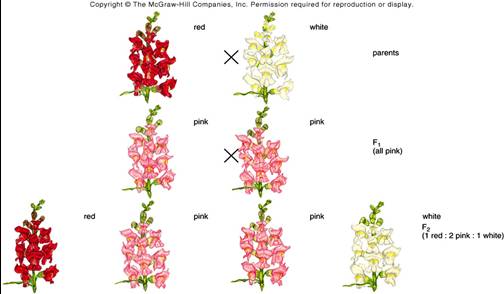
- Sometimes neither allele is fully dominant over the other
- Incomplete Dominance: neither allele is dominant but combine and display
a new trait that is a mixing of the two alleles
|
|
6
|
|
|
7
|
- In incomplete dominance, the two alleles are represented as
- Two capital letters, one with an apostrophe to indicate the different
allele that is involved
- Ex. R (for the red allele) and
R’ (for the white allele)
- When these two alleles come together, they portray a mixing of the two
phenotypes!
|
|
8
|
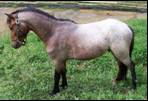
- Other times both alleles are fully dominant
- Codominance: both alleles of a gene are dominant and the heterozygous
phenotype has both traits equally expressed
|
|
9
|
|
|
10
|
- In codominance the two alleles are represented as
- Two capital letters: Use the
first letter of one trait (B for Brown) and the first letter of the
other trait (W for White)
- When they come together as a heterozygote, both traits show as the
phenotype
|
|
11
|
- Let’s say there are two alleles for the hair color trait- red and blue
- What would be the resulting phenotype of a heterozygous pair if the
alleles showed incomplete dominance?
- A. Red
- B. Blue
- C. Purple
- D. Red and Blue patches
|
|
12
|
|
|
13
|
- Sometimes there are more than two alleles that govern the phenotype of a
trait
- Multiple Alleles: the presence of
more than two alleles for a genetic trait
|
|
14
|
- Blood Type
- Human blood type is governed by the presence of 3 different alleles:
- However, each person only has 2 of these 3 alleles in their DNA
|
|
15
|
- Blood types follow both Codominant and simple Dominant inheritance
- The A allele and B allele are codominant with each other
- The A allele and B allele are both purely dominant over the O allele
- The O allele is recessive
|
|
16
|
|
|
17
|
- The blood type gene and alleles are represented differently than you
have seen before
- The blood type gene is I
- For this I gene you can have the following alleles:
- For A: IA
- For B: IB
- For O: i
|
|
18
|
- What are the two allele combinations you can have for type A blood?
- What are the two allele combinations you can have for type B blood?
|
|
19
|
- What is the only allele combination you can have for type AB blood?
- What is the only allele combination you can have for type O blood?
|

 Notes
Notes