|
1
|
- “The handwriting on the wall may be a forgery”
- —Ralph Hodgson, British poet
|
|
2
|
- That an expert analyst can individualize handwriting to a particular person.
- What types of evidence are submitted to the document analyst.
- Three types of forgery.
- How to characterize different
types of paper.
|
|
3
|
- Students will be able to:
- Analyze handwriting using 12 points of analysis.
- Detect deliberately disguised handwriting.
- Detect erasures and develop impression writing.
- Design an experiment using paper chromatography to determine which pen altered a note.
- List safeguards against the counterfeiting of U.S. currency.
|
|
4
|
- Involves the examination of handwriting, ink, paper, etc. to ascertain
source or authenticity
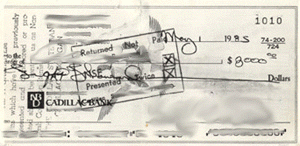
- Examples include letters, checks, licenses, contracts, wills, passports
- Investigations include: verification, authentication, characterizing
papers, pigments, and inks
|
|
5
|
- Historical Dating—the verification of age and value of a document or
object
- Fraud Investigation—focuses on the money trail and criminal intent
- Paper and Ink Specialists—date, type, source, and/or catalogue various
types of paper, watermarks, ink, printing/copy/fax machines, computer
cartridges
- Forgery Specialists—analyze altered, obliterated, changed, or doctored
documents and photos
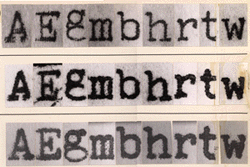
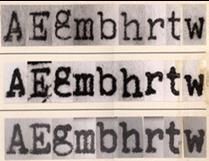
- Typewriting Analysts—determine origin, make, and models
- Computer Crime Investigators—investigate cybercrime
|
|
6
|
- Forensic Document Examination
- involves the analysis and
comparison of questioned documents with known material in order to
identify whenever possible, the author or origin of the questioned
document.
|
|
7
|
- Handwriting analysis involves two phases:
- The hardware—ink, paper, pens, pencils, typewriter, printers
- Visual examination of the writing
|
|
8
|
- Line Quality
- Word and Letter Spacing
- Letter Comparison
- Pen Lifts
- Connecting strokes
- Beginning and ending strokes
- Unusual Letter Formation
- Shading or pen pressure
- Slant
- Baseline Habits
- Flourishes or embellishments
- Diacritic Placement
|
|
9
|
- Analysis of the “knowns” with a determination of the characteristics
found in the known
- Analysis of the questioned or unknown writing and determination of its
characteristics
- Comparison of the questioned writing with the known writing.
- Evaluation of the evidence, including the similarities and
dissimilarities between the “questioned” and “known” writing
- The document examiner must have enough exemplars to make a
determination of whether or not the two samples match.
|
|
10
|
- The subject should not be shown the questioned document
- The subject is not told how to spell words or use punctuation
- The subject should use materials similar to those of the document
- The dictated text should match some parts of the document
- The subject should be asked to sign the text
- Always have a witness
|
|
11
|
- Simulated forgery—one made by copying a genuine signature
- Traced forgery—one made by tracing a genuine signature
- Blind forgery—made without a model of the signature
|
|
12
|
- Check Fraud
- Forgery
- Counterfeit
- Alterations
- Paper Money
- Identity
- Social Security
- Driver’s license
- Credit Cards
- Art—imitation with intent to deceive
- Microscopic examination
- Electromagnetic radiation
- Chemical analysis
- Contracts—alterations of
contracts, medical records
|
|
13
|
- Obliterations—removal of writing by physical or chemical means can be
detected by:
- Microscopic examination
- UV or infrared (IR) light
- Digital image processing
- Indentations can be detected by:
- Oblique lighting
- Electrostatic detection apparatus (ESDA)
|
|
14
|
- Major George Byron (Lord Byron forgeries)
- Thomas Chatterton (Literary forgeries)
- John Payne Collier (Printed forgeries)
- Dorman David (Texas Declaration of Independence)
- Mark Hofmann (Mormon, Freemason forgeries)
- William Henry Ireland (Shakespeare forgeries)
- Clifford Irving (Howard Hughes forgery)
- Konrad Kujau (Hitler Diaries)
- James Macpherson (Ossian manuscript)
- George Psalmanasar (Literary forgery)
- Alexander Howland Smith (Historical documents)
|
|
15
|
- Experts that look at the linguistic content (the way something is
written) of a questioned document.
- Language that is used can help to establish the writer’s age, gender,
ethnicity, level of education, professional training, and ideology.
|
|
16
|
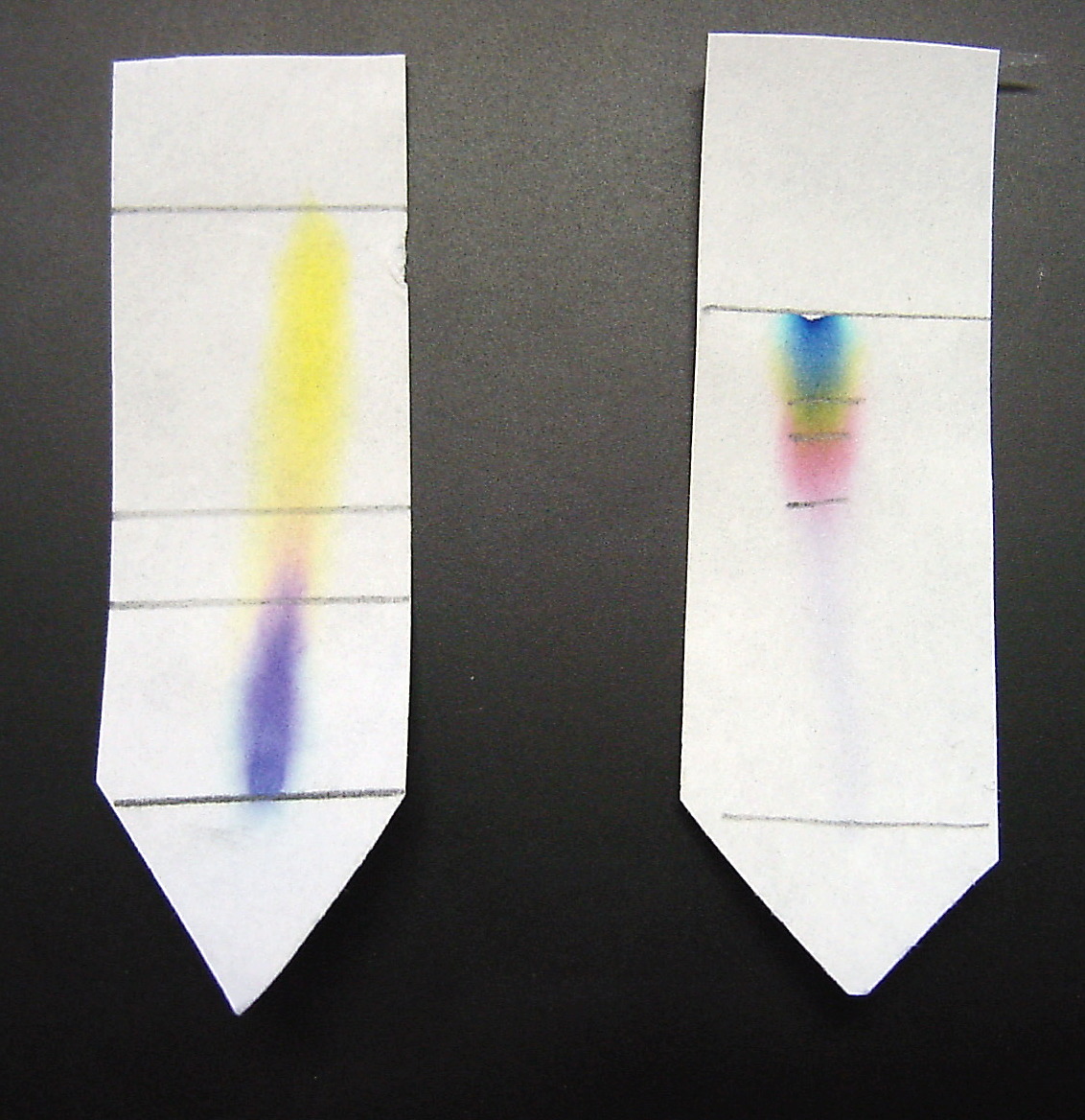
- Chromatography is a method of physically separating the components of
inks
- Types
- HPLC—high-performance liquid chromatography
- TLC—thin-layer chromatography
- Paper Chromatography
|
|
17
|
- Two samples of black ink from two different manufacturers have been
characterized using paper chromatography.
|
|
18
|
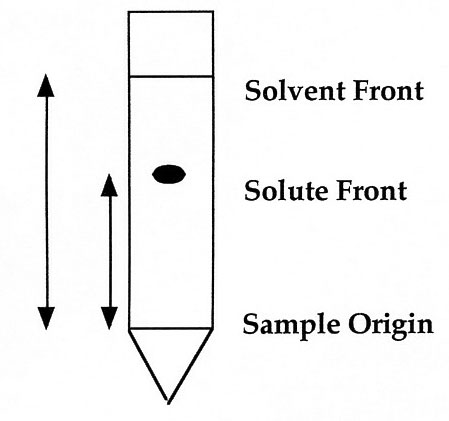
- A number that represents how far a compound travels in a particular
solvent
- It is determined by measuring the distance the compound traveled and
dividing it by the distance the solvent traveled.
|
|
19
|
- Differences
- Raw material
- Weight
- Density
- Thickness
- Color
- Watermarks
- Age
- Fluorescence
|
|
20
|
- Lead
- Hardness Scale—a traditional measure of the hardness of the
"leads" (actually made of graphite) in pencils. The hardness
scale, from softer to harder, takes the form ..., 3B, 2B, B, HB, F, H,
2H, 3H, 4H, ..., with the standard "number 2" pencil being of
hardness 2H.
|
|
21
|
- Class characteristics may include general types of pens, pencils or
paper.
- Individual characteristics may include unique, individual handwriting
characteristics; trash marks from copiers, or printer serial numbers.
|
|
22
|
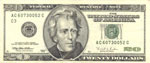
- In 1996 the government starting adding new security features to our
paper money due to the advanced copying technologies that have raised
the incidences of counterfeiting. The $20 bill entered circulation on
October of 2003, followed by the $50 in September of 2004, and then the
$10 in September of 2005. Subtle background colors have been added along
with other features to discourage counterfeiting.
|
|
23
|
- For additional information about document and handwriting analysis,
check out Court TV’s Crime Library at:
- lwww.crimelibrary.com/criminal_mind/forensics/literary/1.htm
- Or forgery cases at:
- www.crimelibrary.com/criminal_mind/scams/lincoln_forgers/index.html
|

 Notes
Notes