|
1
|
|
|
2
|
|
|
3
|
- STOP!!!
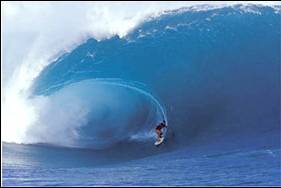
- What do waves transfer?
- Answer: Energy!!!
|
|
4
|
- What is a wave?
- Waves transport energy from one place to another
- Waves are disturbances or variations that travel and transport energy
- They transport ENERGY, NOT the medium or matter they travel through.
- Tasks…
- List as many examples as you can of waves…
- What do waves transport?
|
|
5
|
- There are 2 main types of Waves
|
|
6
|
- Again, there are two main types of waves:
- Transverse and Longitudinal
- Transverse waves = perpendicular disturbance to direction of wave (like
waves through a rope)
- Longitudinal waves = parallel disturbance to direction of wave (like
pushing on a slinky)
|
|
7
|
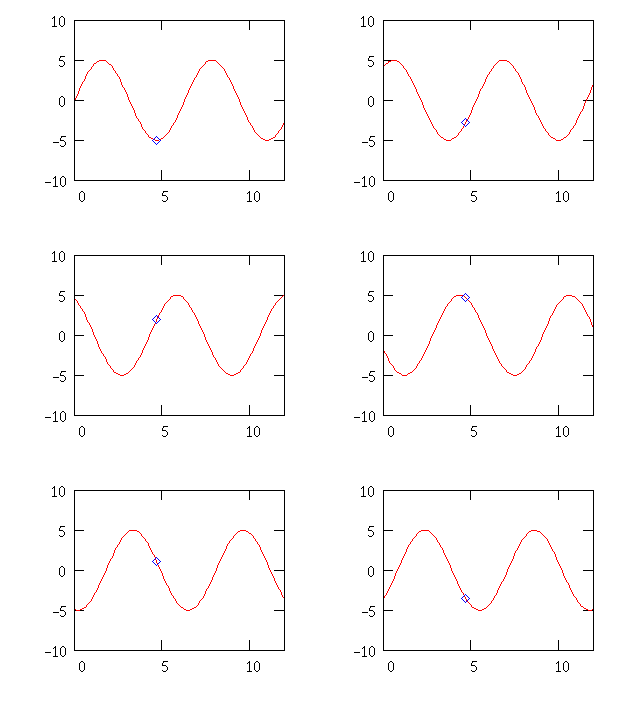
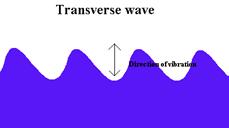
- Transverse: the disturbance in transverse waves is perpendicular to the
direction of the wave
|
|
8
|
|
|
9
|
- Transverse: medium/molecules move perpendicular to the direction the
wave travels
|
|
10
|
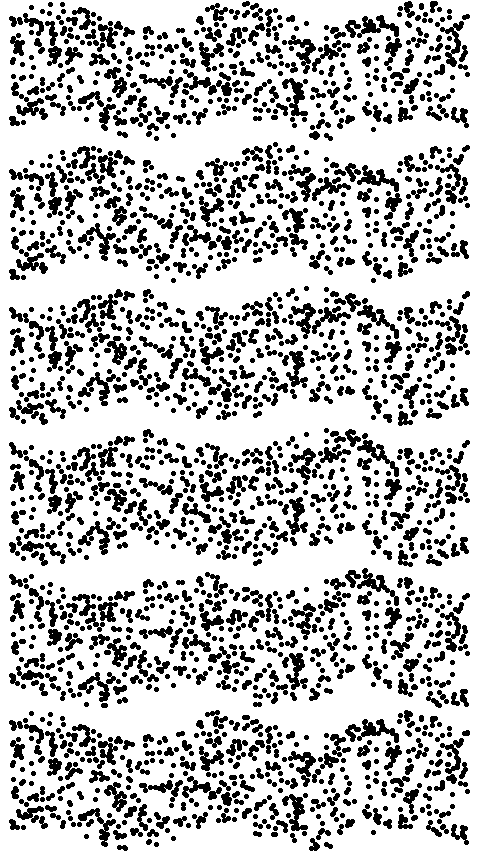
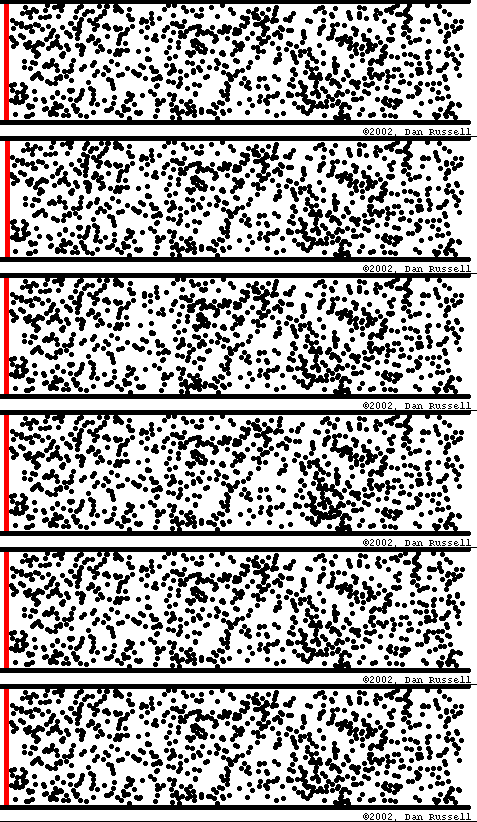
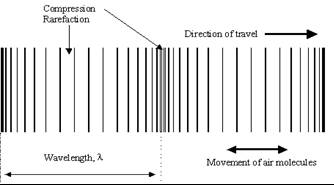
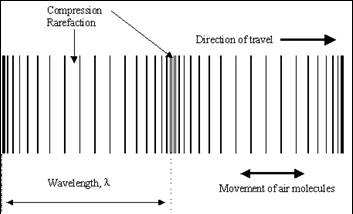
- Longitudinal: medium/molecules move parallel to direction the wave
travels
- Compression: closely packed molecules/medium
- Rarefaction: widely-spaced molecules/medium
|
|
11
|
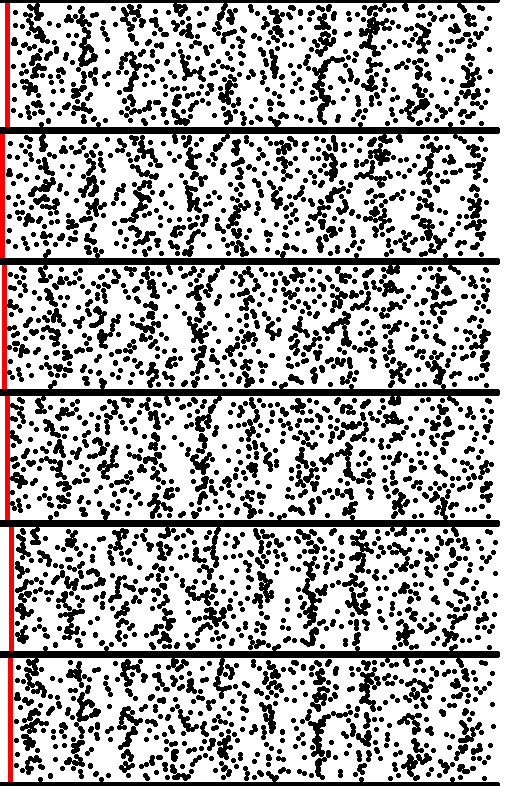
- Longitudinal (also known as compression waves) the disturbance is
parallel to direction of the wave for compression waves
|
|
12
|
- Examples of longitudinal waves are: sound waves and P-type earthquake
waves
|
|
13
|
- Longitudinal waves travel faster through more dense materials.
- For example, sound waves travel faster under water than they do through
air…
|
|
14
|
|
|
15
|
- Turn to your partner and discuss the following questions – be prepared
to share!
- What is a wave, what do they travel through, & what do they
transfer?
- What are the 2 types of waves?
- What are the 2 classifications of a wave (in terms of the direction the
particles travel as the wave passes through)
|
|
16
|
- Turn to page 462 in the class set of Science Spectrum books, and answer
the practice problems 1-5.
|
|
17
|
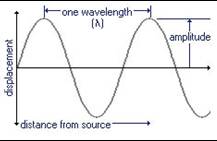
- Wave Crest
- The highest point of a wave
- Wave trough
- The lowest point of a wave.
- Wavelength Distance from any
point on one wave to the identical point on the next wave (crest to
crest; trough to trough; beginning to beginning)
- Height Distance from crest to trough
- Amplitude Distance from centerline of wave to top of crest or bottom of
trough
|
|
18
|
- To figure out the amplitude of a wave, find where the wave is at rest
(usually 0). The distance from
rest to the crest or trough is the amplitude.
- To figure out the wavelength, find the same point at two consecutive
waves. The distance between the
two points is the wavelength.
|
|
19
|
|
|
20
|
- Cycle The movement from some point, to another point and back again
- Frequency: number of wave crests/trough that pass a point in a given
period of time after the first/leading trough/crest (usually cycles/sec
= Hz)
- Period: the time required for one full wavelength to pass a given point
- Wave Equation The wave equation tells us that the relationship between
the velocity (speed) of a wave and its frequency is:
|
|
21
|
|
|
22
|
|
|
23
|
|
|
24
|
- Turn to your partner and discuss the following questions – be prepared
to share!
- What are the parts of a wave?
- What is the difference between the frequency and period of a wave?
- What is the Doppler Effect?
|
|
25
|
- Turn to page 471 and answer questions 1-9. Answer your questions
completely! Start by writing the
equation and then solving for the answer – I want to see your work!
|

 Notes
Notes