|
1
|
|
|
2
|
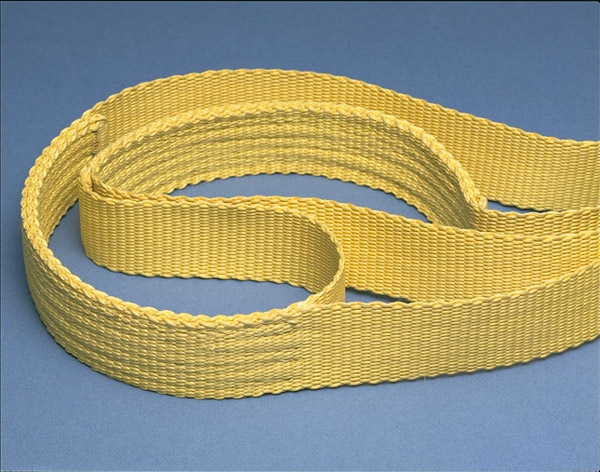
- A ton of things have been synthesized; nylon, teflon, kevlar, pvc,
nutrasweet…
- What new things are made of is very important
- In this chapter we will determine formulas
- BUT! first we must learn how to count atoms
- How???
|
|
3
|
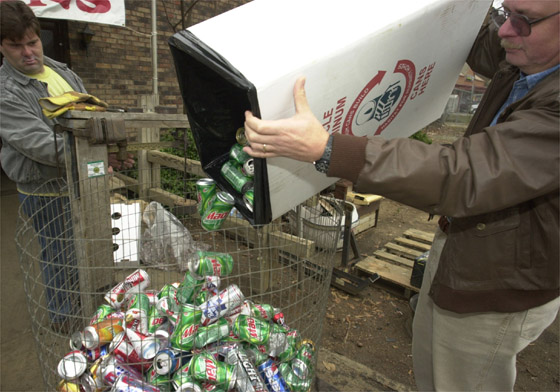
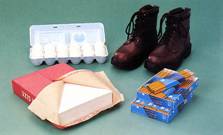
- How does one count candy, or pennies, or nails, or M&Ms, or recycled
Aluminum cans??? they’re so numerous, and small! help!
- Count them by weighing
them! (?)
- However, we must assume
that all the “things”
are 1) Identical OR
2) They have
an average weight
- Since most things
don’t occur identically, one must take an average of mass of
those things…
|
|
4
|
- If you act as if they are all that average weight, it’s easy:
- Take how much the whole pile weighs
- Divide it by the average mass of them
- ba-da-bing! you know how many there are!
- we do the same thing with tiny invisible atoms; we count by weighing!
|
|
5
|
- OK, now we move to atoms
- Chemistry is wants to find out how
many of these are needed to react with a certain number of those to get so
many of these
- meaning: Numbers of things are Super -important
- time for thinking cap!
|
|
6
|
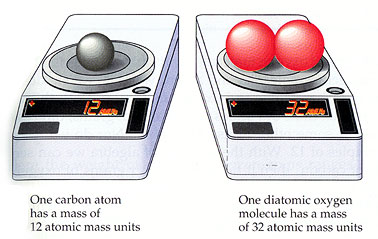
- The mass of an atom is unbelievably small (e.g. a C atom weighs 1.99 x
10-23 g)
- So kg and g are out!
- We need a new unit small enough to deal with these tiny guys reasonably
- Chemists use the atomic mass unit (amu)
- 1 amu = 1.66 X 10⁻²⁴ g
- atoms will weigh so many amu’s
- now back to atoms and counting by weighing…
|
|
7
|
- Remember isotopes? not all atoms are the same?!
- Carbon exists as:
- C-12, C-13, and C-14
- They occur in different types, but altogether they can give us an
average mass
- The average atomic mass for carbon on this planet is 12.01 amu (all the
rest are listed on the Periodic Table)
- Let’s act, for the rest of chemistry, as if atoms have this one mass,
the one listed on the Periodic Table
|
|
8
|
- what is the mass, in amu, of 75 Al atoms?
(1 Al = 26.98 amu)
|
|
9
|
- how many atoms are in 1172.49 amu of Na atoms? (1 Na = 22.99 amu)
|
|
10
|
- Up to this point we’ve used submicroscopic amounts of stuff
- What about realistic amounts??? ready?
- How about making it easy for everyone?…
|
|
11
|
- How about we pick the number of atoms which will change amu’s to grams?
- What number will take…
12.01 amu C -> 12.01 g C
26.98 amu Al -> 26.98 g Al
63.55 amu Cu -> 63.55 g
- Just one number, Avogadro’s number, the number all chemists throughout
the world use every day of their miserable lives, the one, the only..
|
|
12
|
|
|
13
|
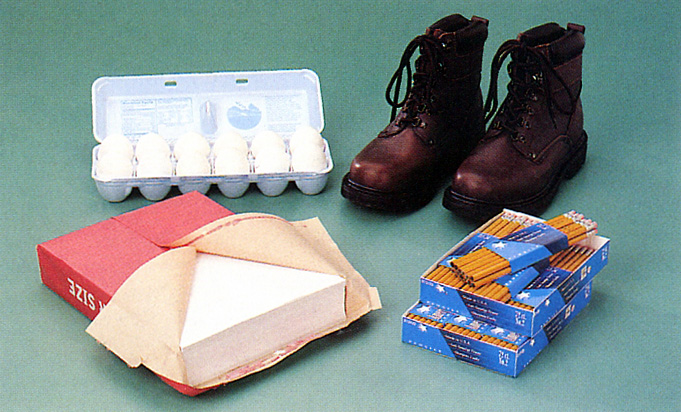
- 1 dozen = 12
1 ream = 500
1 pair = 2
1 gross = 144
1 mol = 6.022 x 10²³
- Counting this number would take 2000 trillion years; a mole of sand
could cover LA in 600 meters of sand; a mole of marbles would cover
Earth in 50 miles of marbles; but!
a mole of water you can cup in one hand!
- An element that weighs as much as the number of grams listed on the
PeriodicTable has a mol, 6.022 x 10²³, atoms in it
|
|
14
|
- Now we can count atoms just by knowing:
1. how much we have (g) and
- 2. The number on the Periodic
Table which now represents a mol of stuff in grams
- more than the molar mass means > 1 mol of stuff
- less than the molar mass means < 1 mol of stuff
- let’s start off easy…
|
|
15
|
- How many atoms in 2.2 mol C?
|
|
16
|
|
|
17
|
- 25.0 g Ca = ? mol = ? atoms
|
|
18
|
- 5.00x 10²⁰ Cr atoms = ? mol = ? g
|
|
19
|
- We dig further into the molar mass thing, and…
- converting moles into mass (visa versa) for compounds now
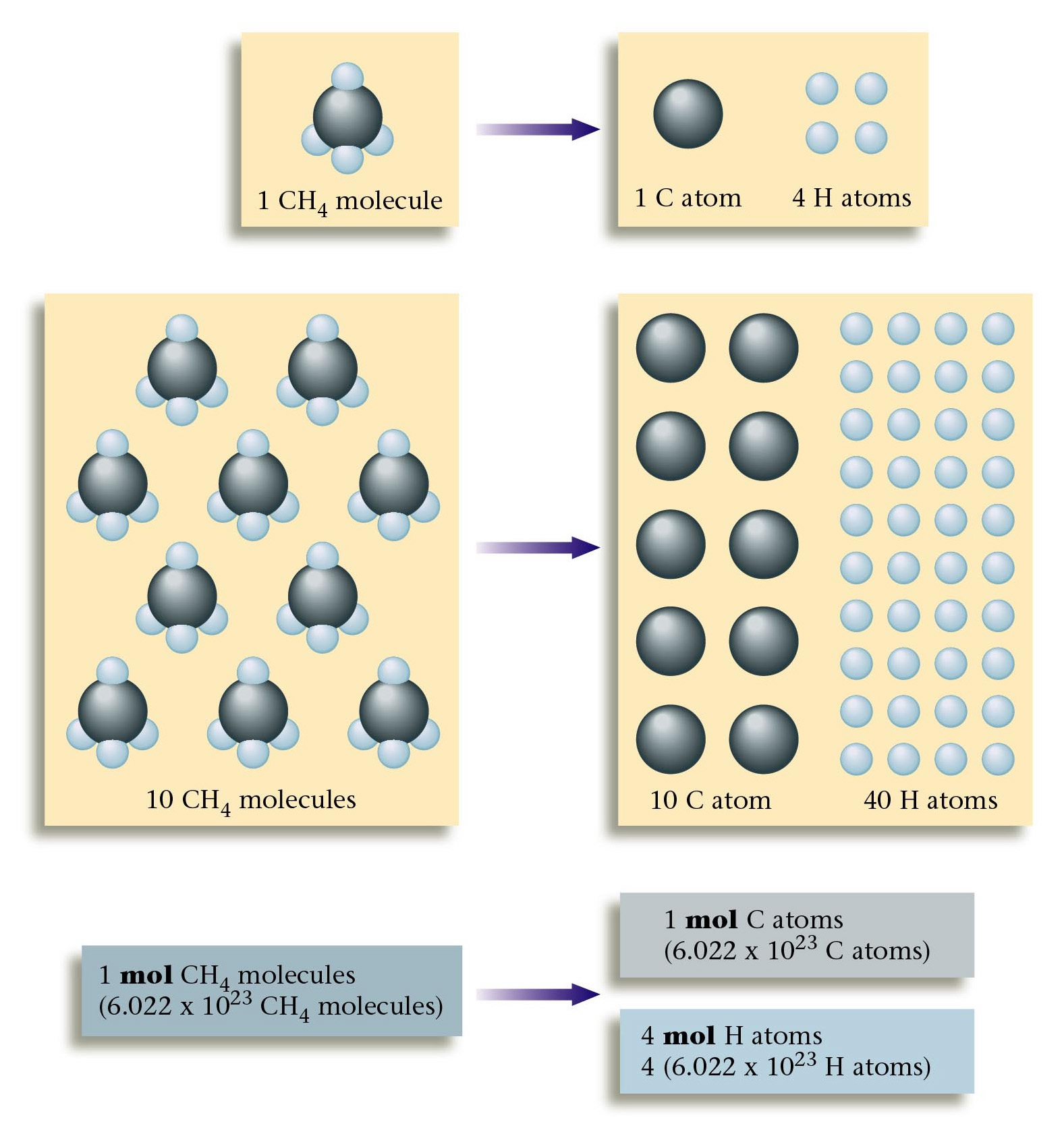
- see next the relationship between micro and macro
|
|
20
|
|
|
21
|
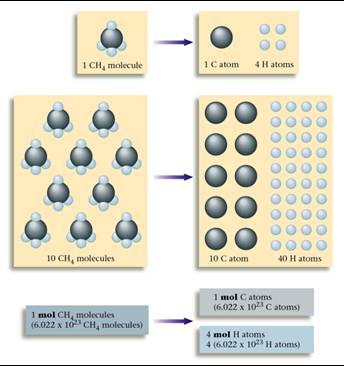
- Do you want to find the molar mass of methane? (yes!)
- Just add up the little guys in the compound!
- for methane that would be:
12.01 (C) + 1.01(H) + 1.01(H) + 1.01(H) + 1.01(H)
- = 16.05 g/mol
- = molar mass
- Just like before: get me a mass of 16.05 g of methane and you’ve given
me a mol of it
|
|
22
|
- what is the molar mass of sulfur dioxide?
(this is why you need to remember names/formulae)
- sulfur dioxide is SO2
- a mol of SO2 has 1 mol S and 2 mol O
- = (1 x 32.07) + (2 x 16.00)
- = 64.07 g/mol
|
|
23
|
- what is the molar mass of:
- water?
- H2O = 18.02 g/mol
- ammonia?
- NH3 = 17.03 g/mol
- propane, C3H8?
- = 44.09 g/mol
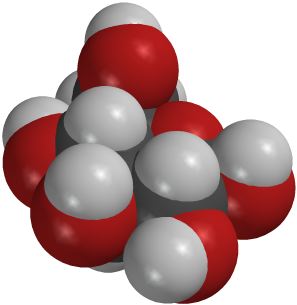
- glucose, C6H12O6?
- = 180.2 g/mol
|
|
24
|
- can do the same with
ionic compounds!
- what is molar mass of:
- calcium sulfate?
- CaSO4 = 136.3 g/mol
- sodium carbonate?
- Na2CO3 = 106.0 g/mol
- barium hydroxide?
- Ba(OH)2 = 171.3 g/mol
|
|
25
|
- calculate molar mass of calcium carbonate
what is the mass of 4.86 mol of this stuff?
- molar mass CaCO3 = 100.09 g/mol
|
|
26
|
- calculate molar mass of juglone (C10H6O3)
what is the mol of 1.56 g of this stuff?
- molar mass C10H6O3 = 174.1 g/mol
|
|
27
|
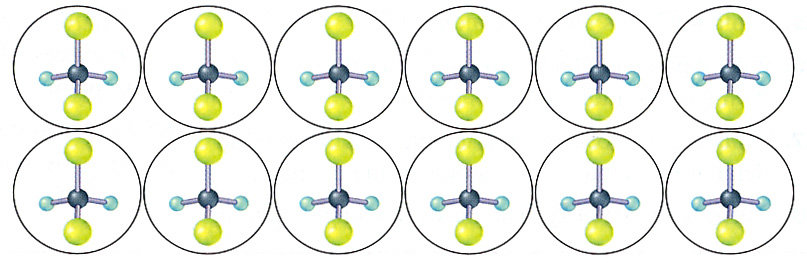
- how many molecules of Teflon (C2F4) are in a 135-g
sample? (hint: do you expect a little or gigantic answer?)
- think! g --> mol --> molecules
- you’ll need molar mass C2F4 = 100.02 g/mol
|
|
28
|
- which score is better? 28/50 or 32/75?
- percent can answer the question
- percent is merely taking a part and
dividing by total (then multiplying by 100)
- same with % comp…
- take mass contributed by one element and divide by total mass of cmpd (x
100)
|
|
29
|
- Can you tell the % composition just from looking at a formula?
e.g. is SO2 33% S and 67% O?
- NO! % composition is a gram ratio thing not a mole ratio thing!!!
- so first change the mole in the formula to grams, then find %…
|
|
30
|
- What is the % composition of SO2?
- SO2 weighs in at 64.07 g/mol
- S contributes 32.07 of it, oxygen 2 x 16.00
- %S = (32.07/64.07) • 100 = 50.05%
- %O = (32.00/64.07) • 100 = 49.94%
|
|
31
|
- What is the % composition of C10H14O?
- C10H14O weighs in at 150.2 g/mol
- C contributes 120.1 of it, H gives it 14.11, and O 16.00
- %C = (120.1/150.2) • 100 = 79.96%
- %H = (14.11/150.2) • 100 = 9.394%
- %O = (16.00/150.2) • 100 = 10.65%
|
|
32
|
- you have:
a 36-g sample = 28 g Fe, 8 g O
a 160-g sample = 112 g Fe, 48 g O
- are they the same substance?
- CAN’T TELL FROM JUST LOOKING AT GRAMS!!!!
- BUT, if they have the same % comp… ta da!
|
|
33
|
- for the 36-g sample = 28 g Fe
- (28 g Fe / 36 g total ) • 100 = 78% Fe
- for the 160-g sample = 112 g Fe
- (112 g Fe / 160 g total ) • 100 =
70% Fe
- Not the same!
|
|
34
|
- #1: 45.0-g sample = 35.1 g Fe, 9.9 g O
- #2: 215.0-g sample = 167.7 g Fe, 47.3 g O
- are they the same?
- (35.1 g Fe / 45.0 g total ) • 100 = 78% Fe
- (167.7 g Fe / 215.0 g total ) • 100 = 78% Fe
- they are the same!
- (the oxygen percents will be the same, too)
|
|
35
|
- #1: 75.0-g sample = 20.5 g C, 54.5 g O
- #2: 135.0-g sample = 67.5 g C, 90.0 g O
- are they the same?
- (20.5 g C / 75.0 g total ) • 100 = 27.3% C
- (67.5g C / 135.0 g total ) • 100 = 50.0% C
- they are not the same!
|
|
36
|
- smallest whole number ratio of a
cmpd is empirical formula
- C6H6 : simplest formula = CH
- C6H12 : simplest formula = CH2
- C3H8 : simplest formula = C3H8
- C6H12O6 : simplest formula = CH2O
|
|
37
|
- to determine the empirical formula you must find MOLE RATIOS of elements
in a compound!!!
- the easy way?
- just change % è g è mol
|
|
38
|
- 36-g iron oxide sample is 78% iron. What is the emperical form?
(remember: think moles)
- 78% Fe è 78g Fe
- 22% O è 22g O
- 78g Fe è1.4 mol Fe
- 22g O è 1.4 mol O
- 1.4 mol Fe : 1.4 mol O is a 1:1 mol ratio
- Therefore, FeO
|
|
39
|
- 27-g sulfur oxide sample has 50% S. What is the emp form?
- 50% S è 50g S
- 50% O è 50g O
- 50g S è 1.56 mol S
- 50g O è 3.12 mol O
- 1.56 mol S : 3.12 mol O is a 1:2 mol ratio
- Therefore, SO2
|
|
40
|
- If the ratio isn’t obvious, divide mol of each substance by the smallest
number…(See Page 178)
- e.g. what if the ratio ends up being something weird like 0.195 Fe:0.291
O ???
- 0.195 / 0.195 = 1
- 0.291 / 0.195 = 1.5
- This is a 1:1.5 ratio which is really 2:3
- therefore Fe2O3
|
|
41
|
- 18.94 g Al reacts with O to make 35.74
g aluminum oxide. what is the empirical formula? (note: where is
g O?)
- 18.94 g Al è 0.701
mol Al
- 16.80 g O è 1.05
mol O
- 0.701 / 0.701 = 1 Al
- 1.05 / 0.701 = 1.5 O
- This is a 2:3 ratio, therefore Al2O3
|
|
42
|
- molecular formula is the real formula
- = a multiple of emp form
- molecular form = empirical form •
n
- n = molecular mass / empirical mass
|
|
43
|
- The empirical formula for a cmpd is P2O5. The molecular mass is 283.88 g/mol. What
is the molecular formula?
- emp mass = 141.94 g/mol
- divide 283.88 / 141.94 = 2
- so, “multiply” P2O5 by two to get P4O10
|
|
44
|
- In a 32.0-g sample of hydrazine, there are 28.0 g N and 4.0 g H. The
molar mass is 32.0 g/mol. What is the molecular formula?
- 1) find emp formula
- 28.0 g N è 2.0
mol N
- 4.0 g H è 4.0 mol
H
- Emp formula = NH2
- 2) find molar mass ratios
- molar mass (32.0) / emp mass ( 16.0) = 2
- 3) multiply by 2 to get formula = N2H4
|
|
45
|
- An additive for gasoline is 71.65% Cl, 24.27% C, 4.07% H. The molar mass
is 98.96 g/mol. What is the molecular formula?
- 1) find emp formula
- 71.65 % Cl è
71.65 g Cl è
2.021 mol Cl
- 24.27 % C è 24.27
g C è
2.021 mol C
- 4.07 % H è 4.07 g
H è 4.04
mol H
- Emp formula = ClCH2
- 2) find molar mass ratios
- molar mass (98.96) / emp mass (49.48) = 2
- 3) multiply by 2 to get formula = Cl2C2H4
|

 Notes
Notes