|
1
|
- BEWARE!!!
- There is a lot memorization involved
- with this chapter.
|
|
2
|
- In the old days compounds had common names like: water, milk of
magnesia, gypsum, quicklime, etc.
- Today we know of over 4 million compounds. Common
names won’t work
- Therefore we have a system!
- First we will learn about
binary compounds, compounds made of two elements
- There are two classes:
- 1) metal/nonmetal
- 2) nonmetal/nonmetal
|
|
3
|
- Metals tend to lose electrons e-,
- Nonmetals gain electrons e-
- Metals like to be positive +
- Nonmetals like to be negative -
- These get together to form binary ionic compounds
|
|
4
|
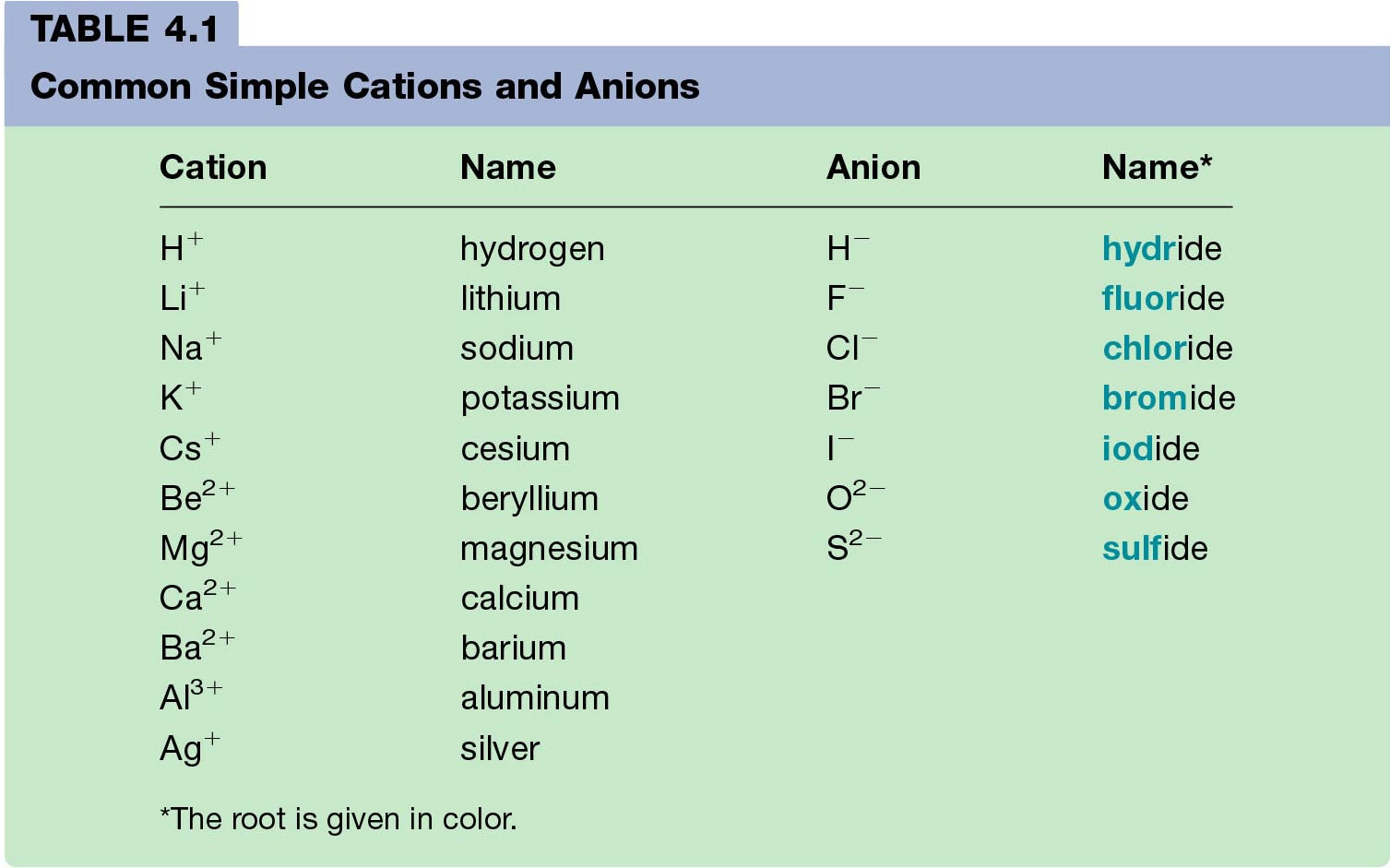
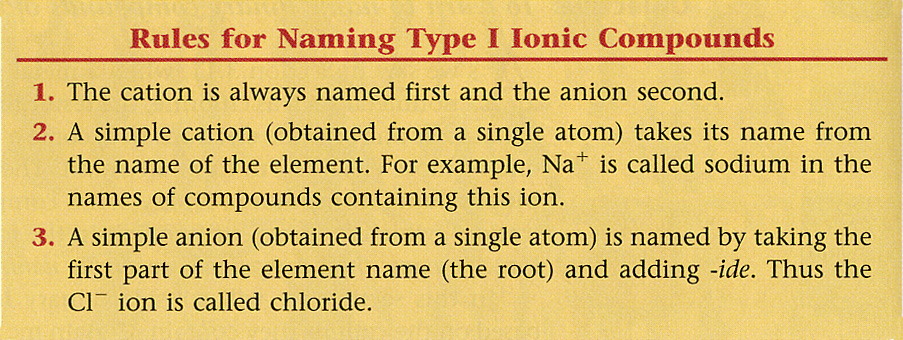
- When writing the
- formula the cation is
- first, anion second
- When naming just
say their names
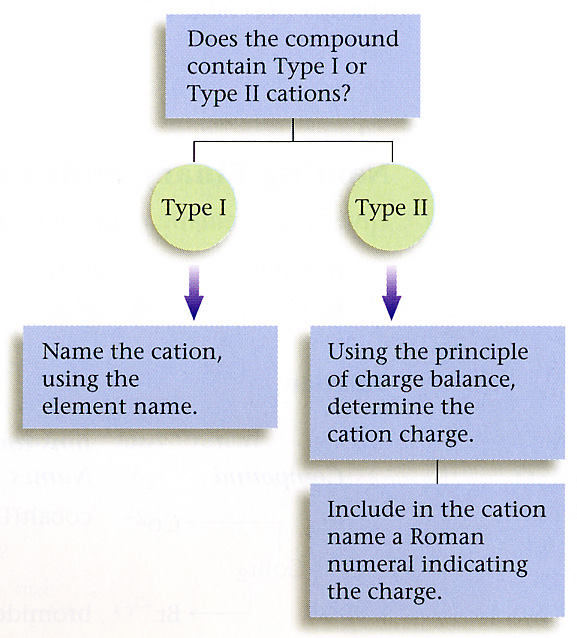
- Some cations have
only one charge
ever (called Type I ion)
- Some have more than
one (Type II ion)
- There are also Type I compounds and Type II compounds
|
|
5
|
|
|
6
|
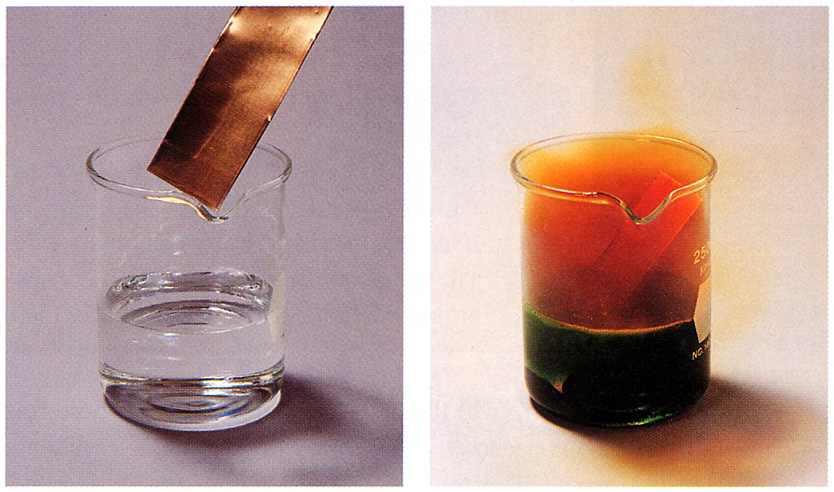
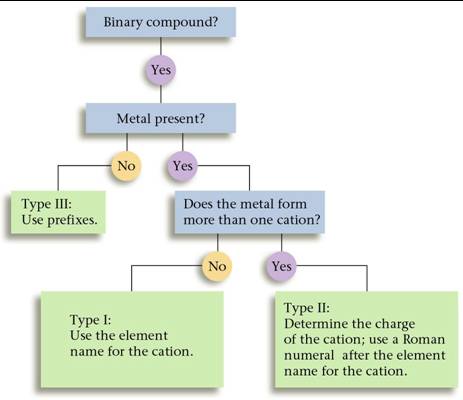
- Some cations can form more than one charge!!!
- (Type II ion!)
- Let’s look at an example….
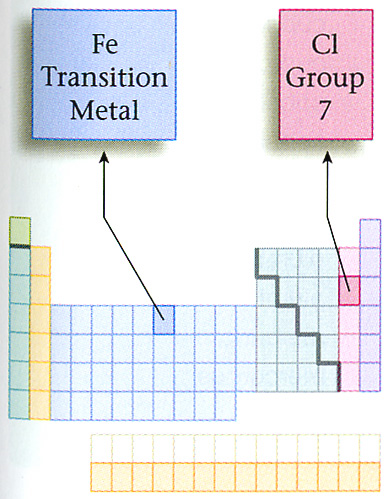
- iron can form 2+ and 3+ ions
- so what is the iron in iron chloride? Fe2+ or Fe3+?
- must be a way to distinguish the two!
- use Roman numerals…
|
|
7
|
- So what is the name
of FeCl2?
- Chloride always has
a 1- charge, and there
are two, so…
- The positive guy must
have a total
2+ charge, and…
- There is only one cation so it get the whole 2+ charge all to itself,
so…
- It must be iron(II), so…
- It is iron(II) chloride
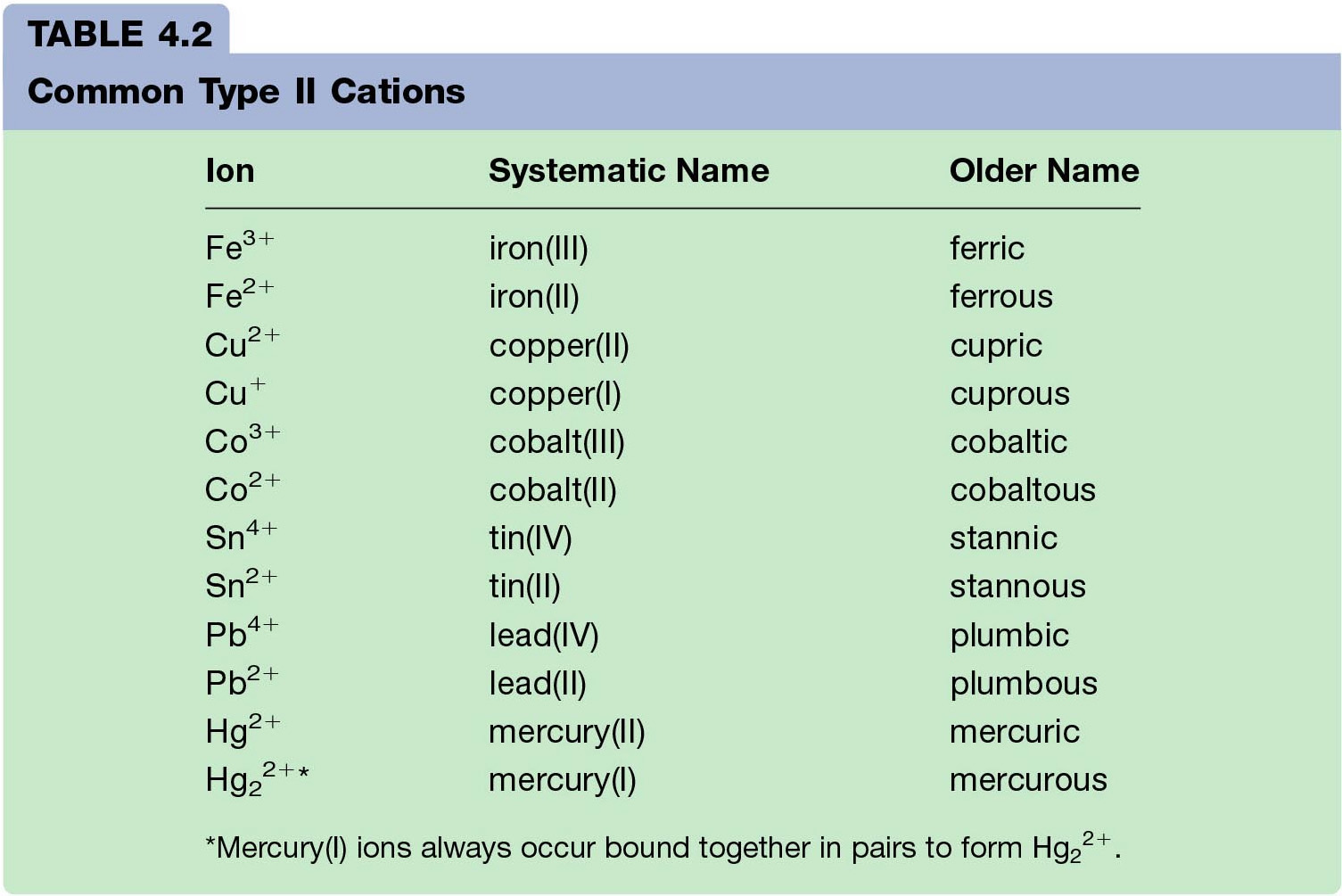
- Know Table 4.2 (the systematic is emphasized in this class!!)
|
|
8
|
- CuCl
- copper(I) chloride
- HgO
- mercury(II) oxide
- Fe2O3
- iron(III) oxide
- Mn2O4
- manganese(IV) oxide
- PbCl4
- lead(IV) chloride
|
|
9
|
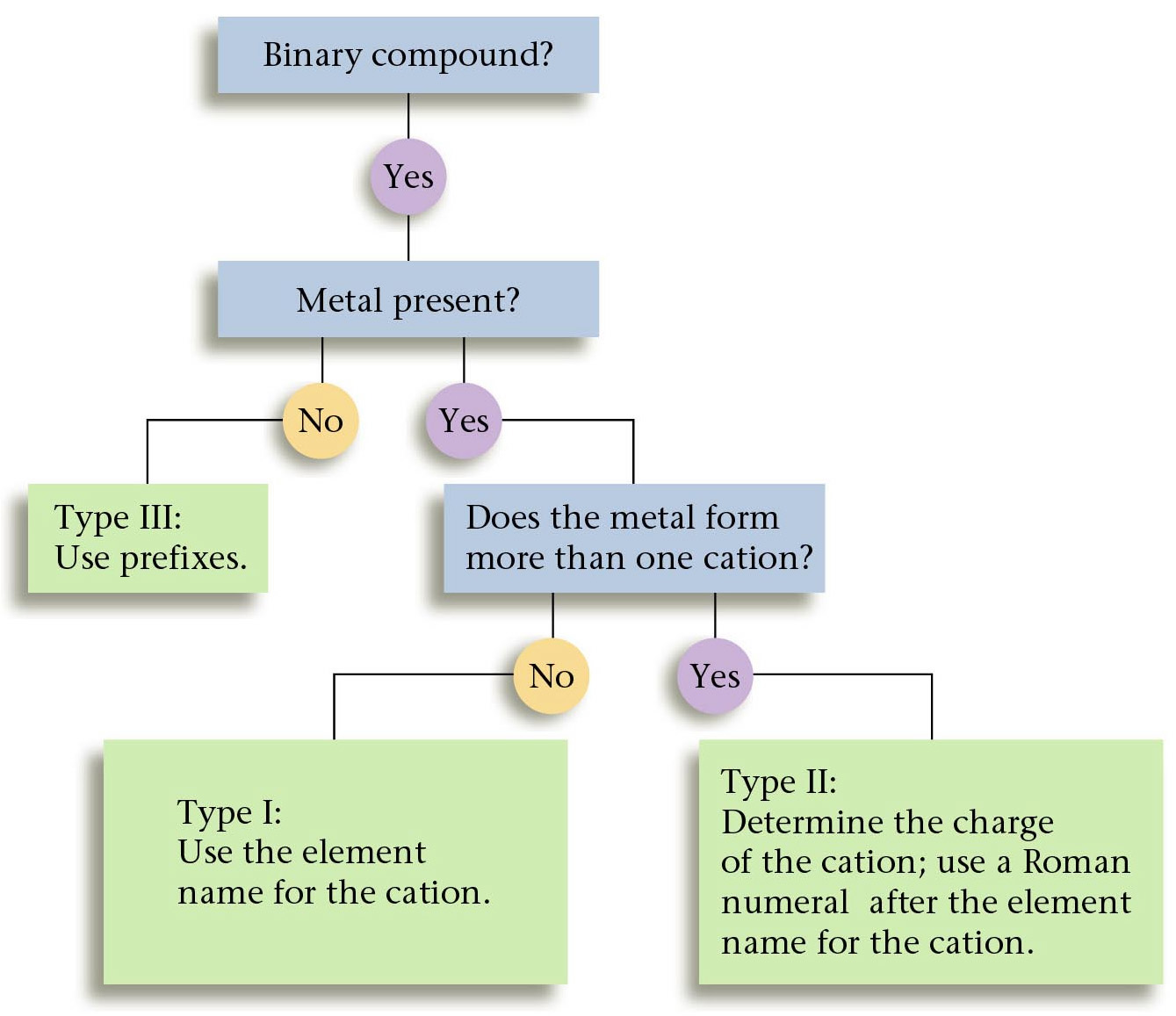
- summary of Type I and Type II
|
|
10
|
- CoBr2
- cobalt(II) bromide
- CaCl2
- calcium chloride
- Al2O3
- aluminum oxide
- CrCl3
- chromium(III) chloride
|
|
11
|
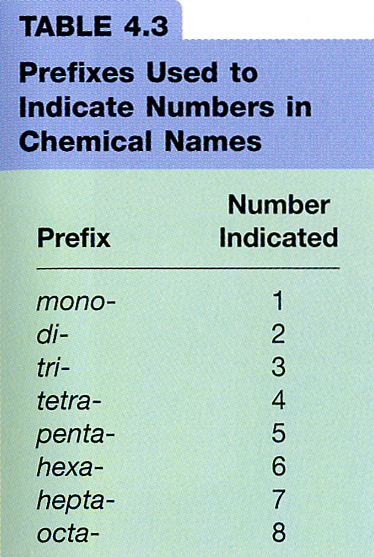
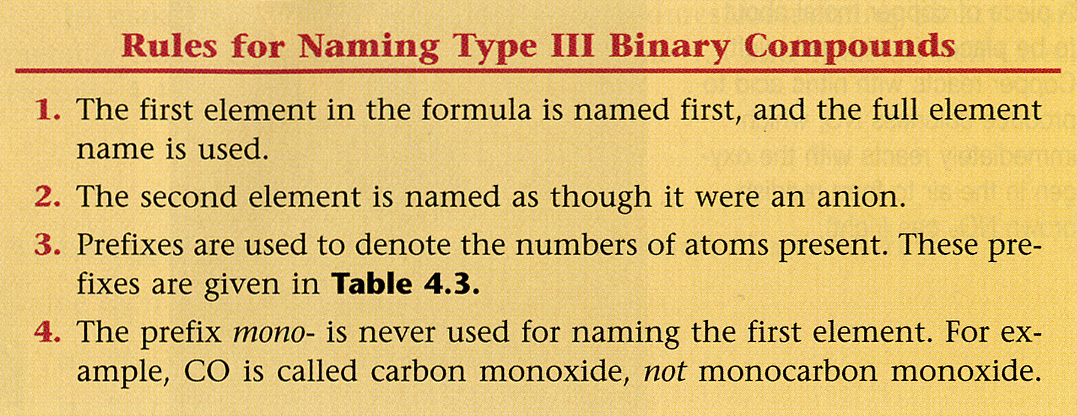
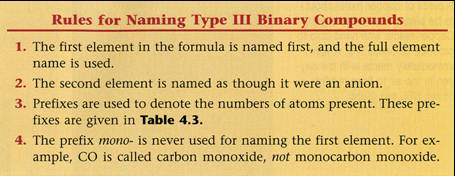
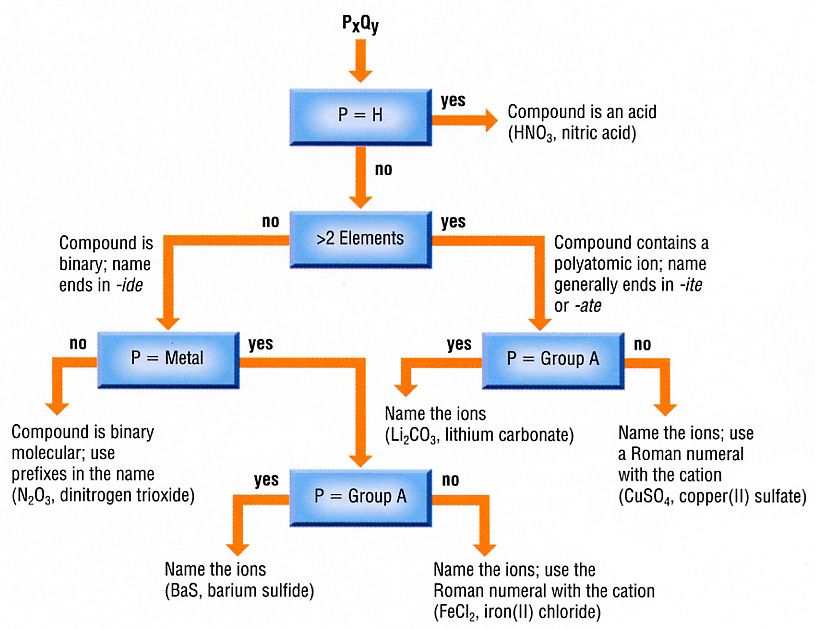
- Type III contain only NM!
- think prefixes!
- (note: water and ammonia are Type III but always keep their common
names)
|
|
12
|
|
|
13
|
- BF3
- boron trifluoride
- NO
- nitrogen monoxide
- N2O5
- dinitrogen pentoxide
- PCl5
- phosphorus pentachloride
- SF6
- sulfur hexafluoride
- SO2
- sulfur dioxide
|
|
14
|
|
|
15
|
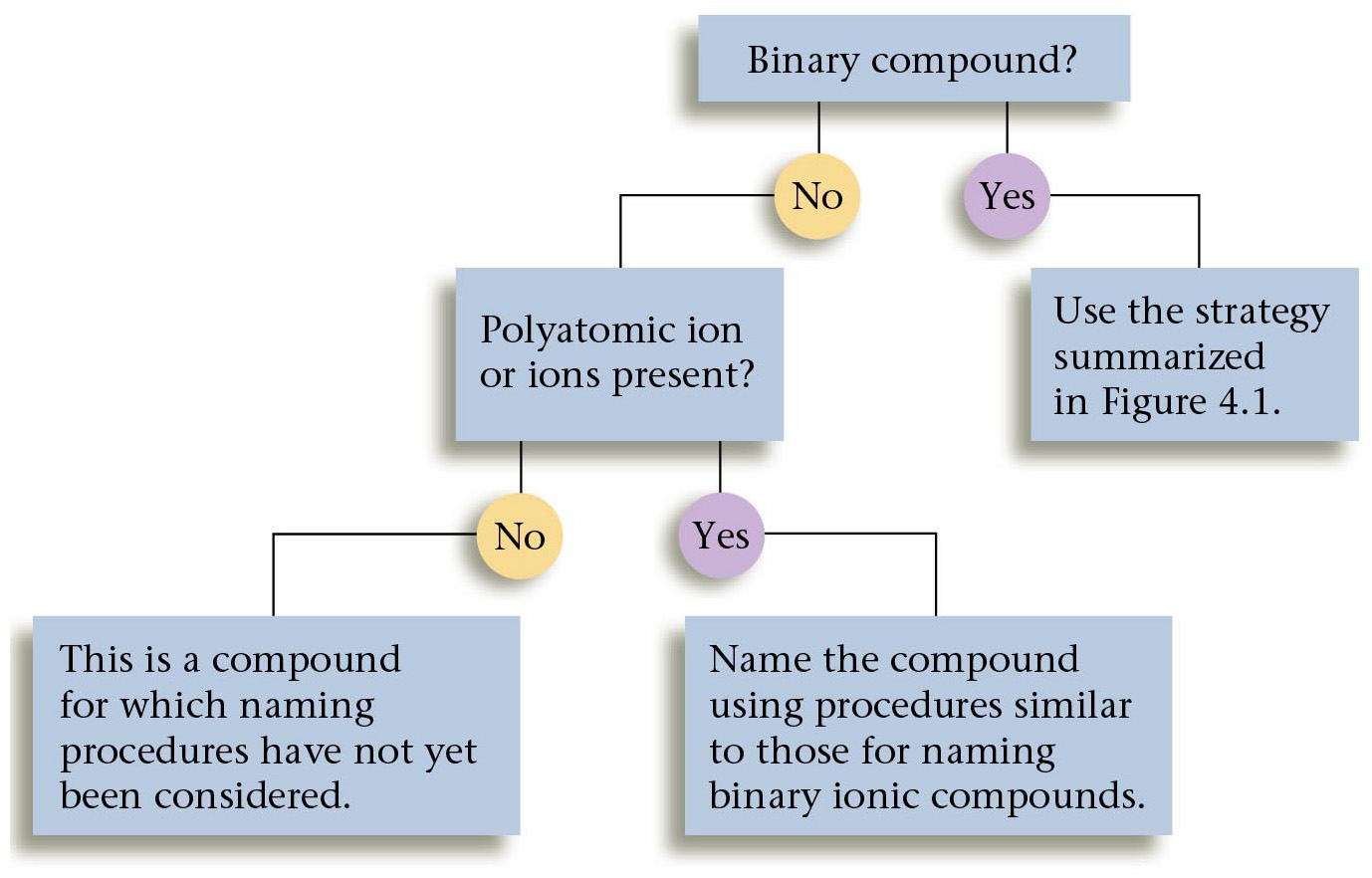
- There is another(!) type of compound, one that involves…
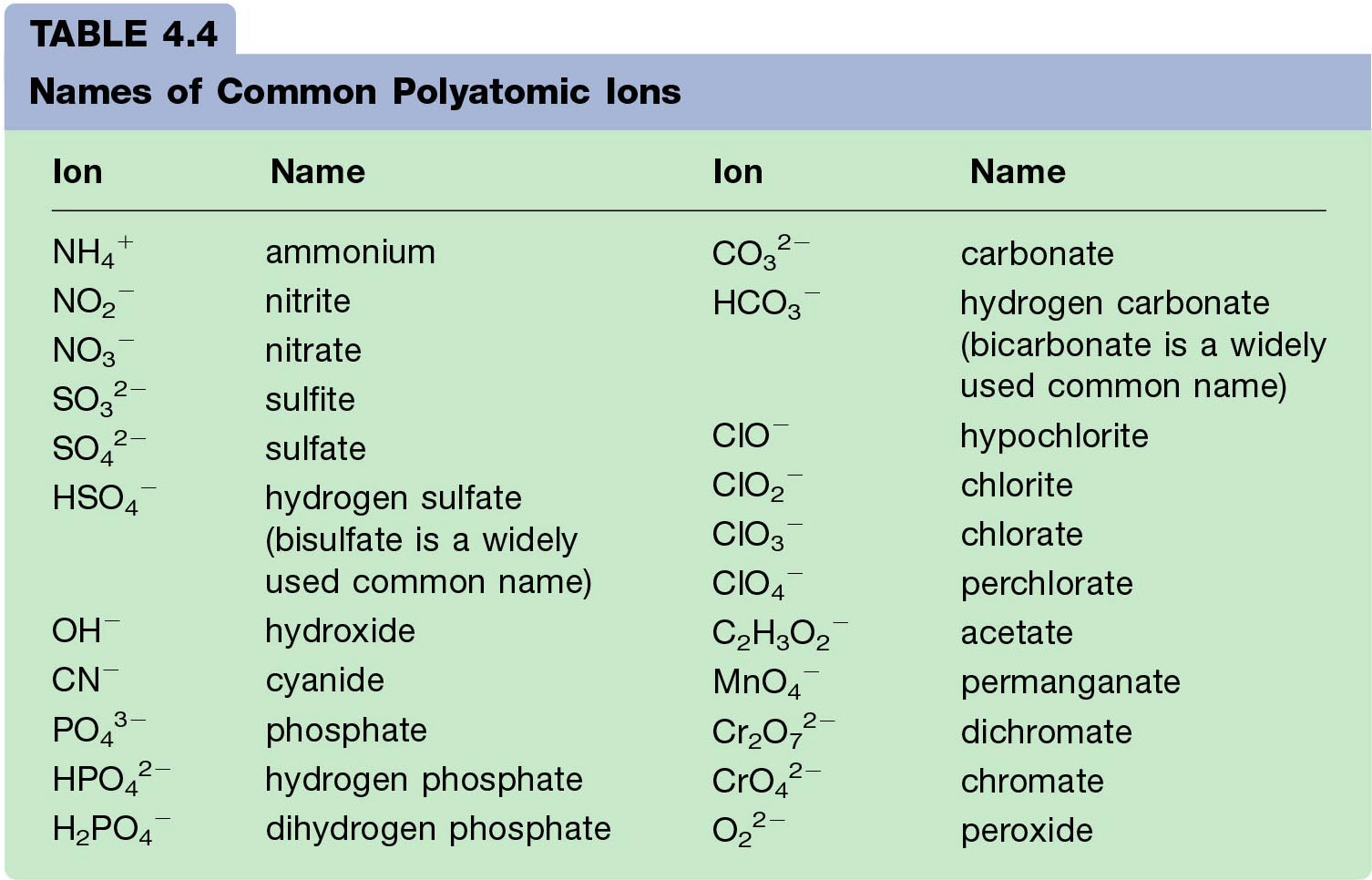
- Polyatomic ions. Ions with more than one type of atom in it
- gotta know Table 4.4
|
|
16
|
- Notice many have O in them
- Called oxyanions
- Most common is called root-ate (e.g. sulfate)
- One less O than most common?
- root-ite (nitrite)
- One less than that?
- hypo-root-ite (hypochlorite)
- One more than most common?
- per-root-ate (perchlorate)
- Must be able to recognize Polyatomic ions!!!
|
|
17
|
- Na2SO4
- sodium sulfate
- Fe(NO3)3
- parentheses here mean there are 3 of what’s inside.
“NO33” is nonsense!
- iron(III) nitrate
- Mn(OH)2
- manganese(II) hydroxide
|
|
18
|
- Na2CO3
- sodium carbonate
- FeBr3
- iron(III) bromide
- PCl3
- phosphorus trichloride
- CsClO4
- cesium perchlorate
- CuSO4
- copper(II) sulfate
|
|
19
|
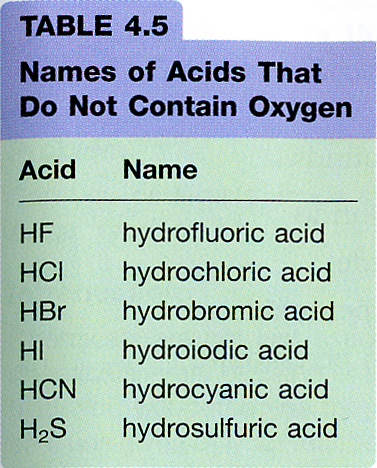
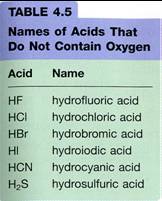
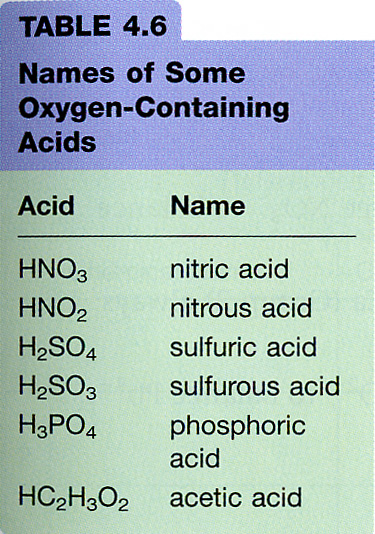
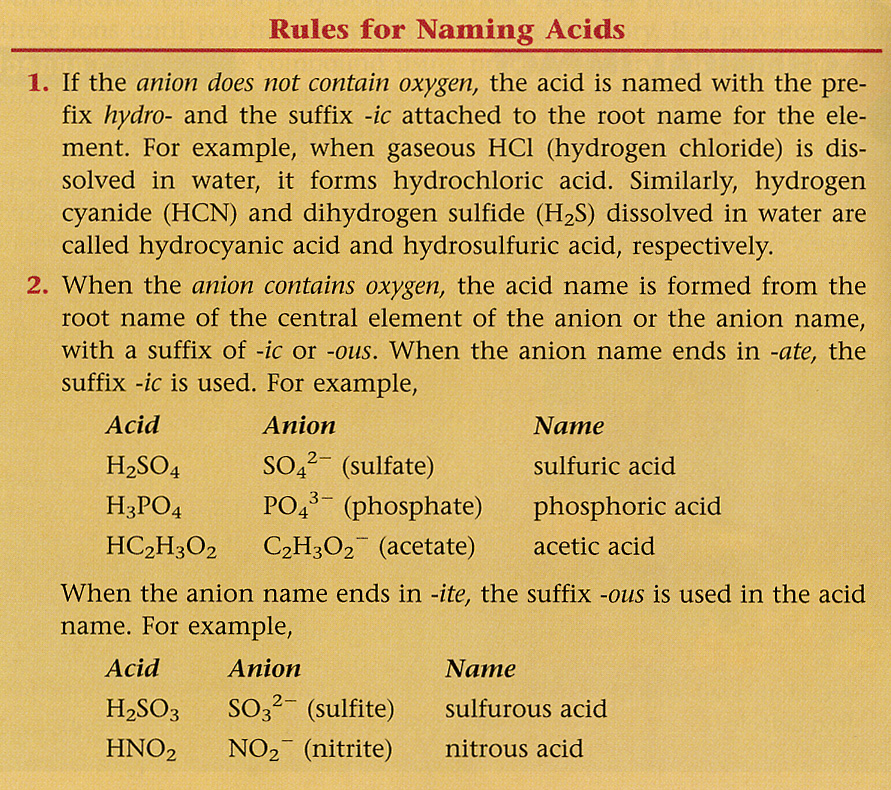
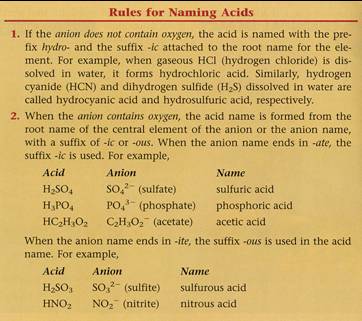
- Some things when dissolved in water can lose an H+ right off
them
- called acids
- taste sour
- know these!
- have their own
name system…
|
|
20
|
|
|
21
|
- so far we’ve done formulas to names…
- now we do reverse! yippee!
- you HAVE TO KNOW all the names I warned you about!!!
|
|
22
|
- potassium hydroxide
- KOH
- sodium carbonate
- Na2CO3
- nitric acid
- HNO3
- calcium chloride
- CaCl2
- dinitrogen pentoxide
- N2O5
- ammonium perchlorate
- NH4ClO4
|
|
23
|
|

 Notes
Notes