|
1
|
- big chapter; buckle your seat belts
|
|
2
|
- The building blocks of life and the changes they undergo are unbelievably
important and a great source of curiosity
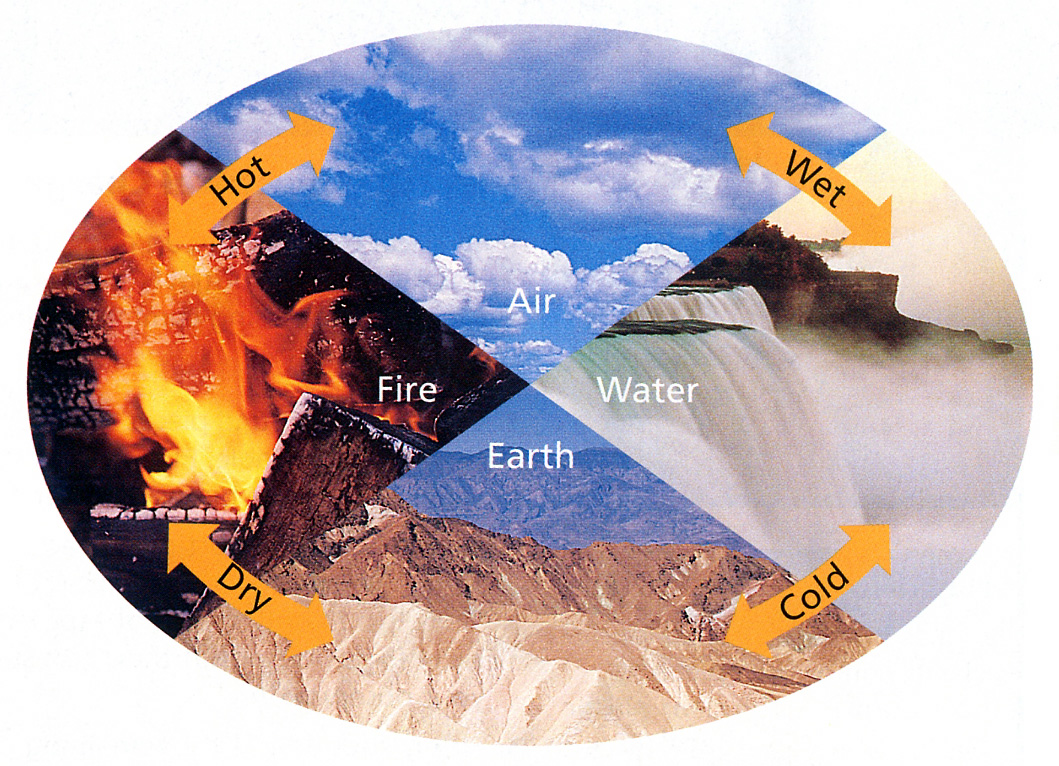
- Greeks first tried to figure out what every thing is made of
- They believed all was made of air, water, fire, and earth
|
|
3
|
- For 2000 years people just dabbled
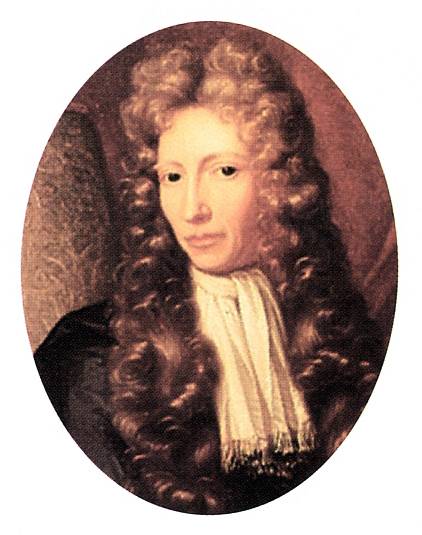
- When Robert Boyle came along (17th century) things began to change
- He insisted on experimentation
- He argued that an element should be anything that could not be broken
down (not air and water, etc.)
|
|
4
|
- Remember there are only over 100 of these things which make up
everything in the universe
- of 115 known elements, 88 are natural
- what are the others?
|
|
5
|
|
|
6
|
- Note:
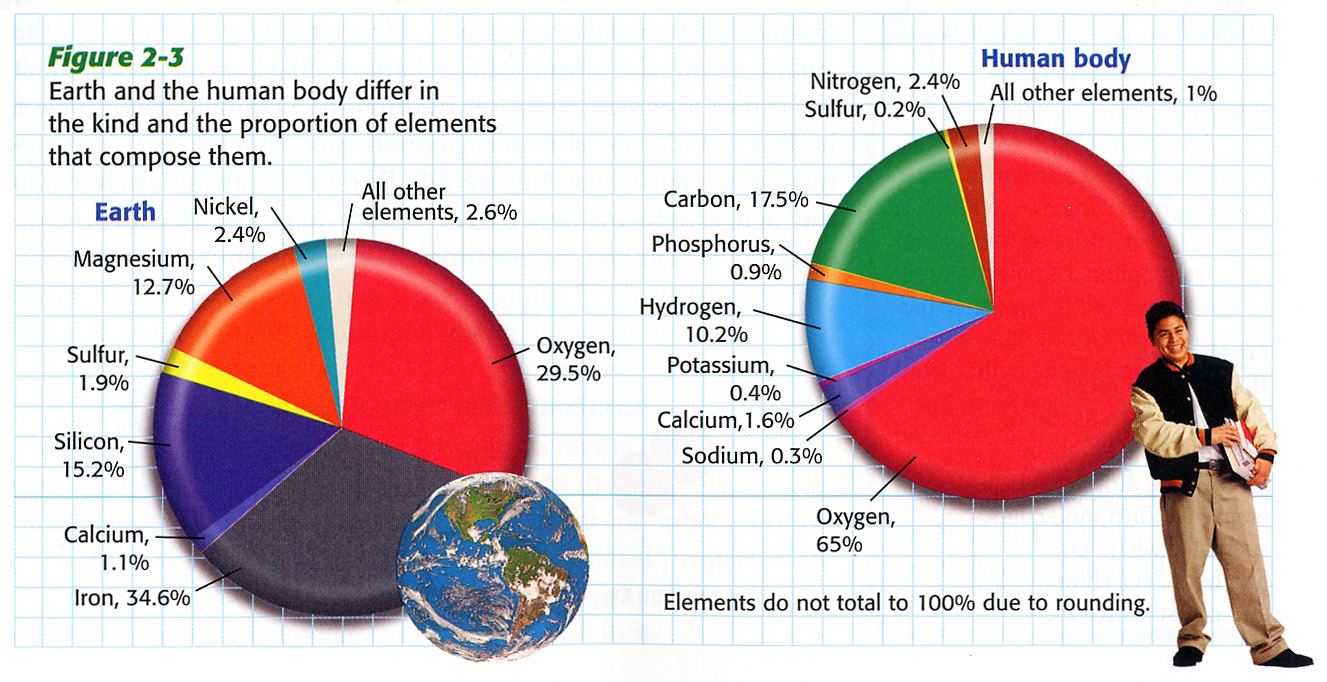
Even though oxygen is the clear winner in both places, it is
mostly wrapped up in compounds (such as iron oxide)
- Clarification:
“Element” can be used:
- to mean a single atom
- to mean a sample (as in air contains the element oxygen)
- generically (as in the body contains the element sodium)
|
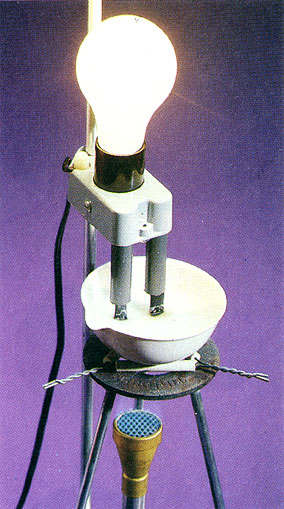
|
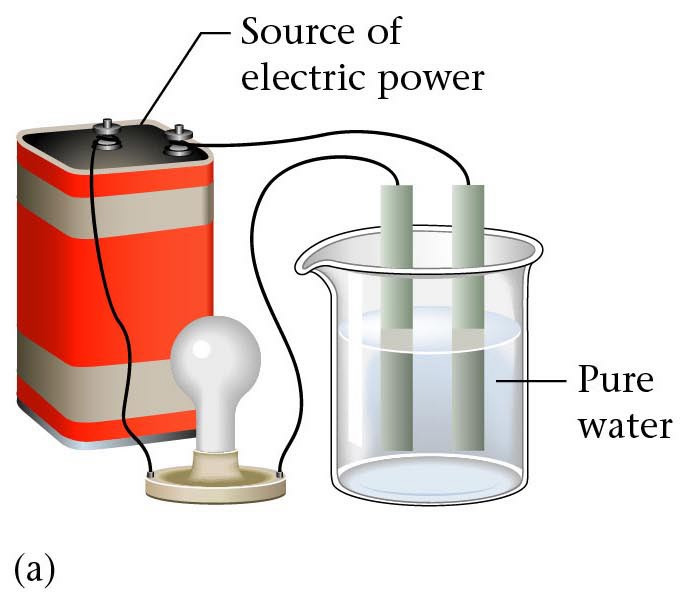
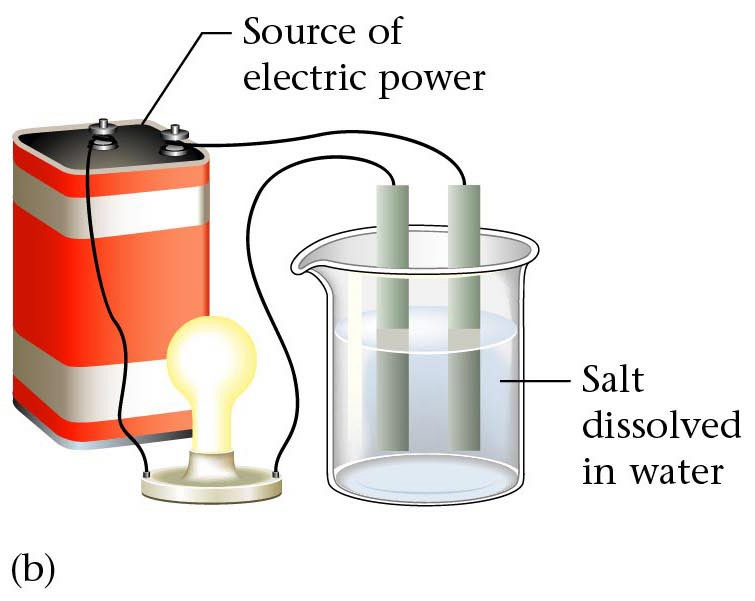
7
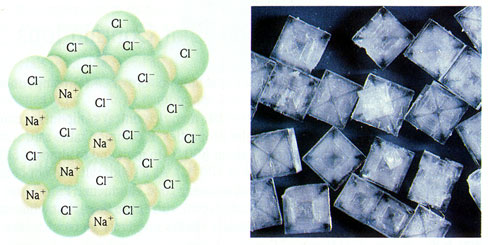
|
- Most names of elements come from Greek, Latin, and German
- example: Gold was called aurum (Latin) meaning the dawn
- Bromine comes from brwmoV, Greek for stench
- Some named for places or people (e.g. plutonium for Pluto, Einsteinium
for Einstein)
|
|
8
|
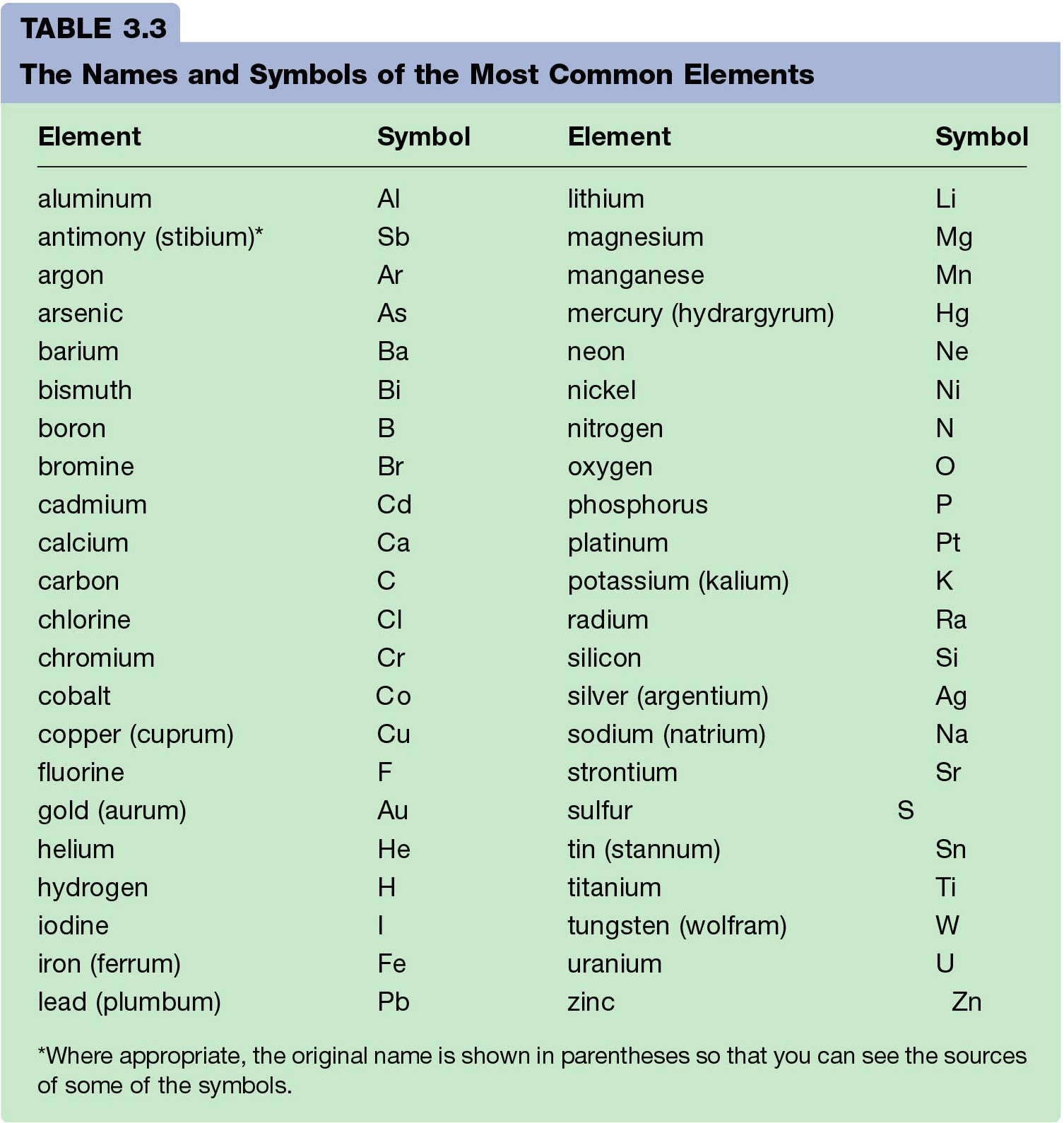
- Usually names are abbreviated called symbols
- First letter ALWAYS capitalized
- second letter, if there is one, is not
- sometimes the original Greek or Latin is preserved in the symbol if not
the name (e.g. gold is Au)
- you must know the following chart
|
|
9
|
|
|
10
|
- In the 1700s people knew these:
- most natural things were really mixtures
- pure substances are either elements or compounds
- a compound is made of the same ratio of stuff no matter where it comes
from (law of constant composition)
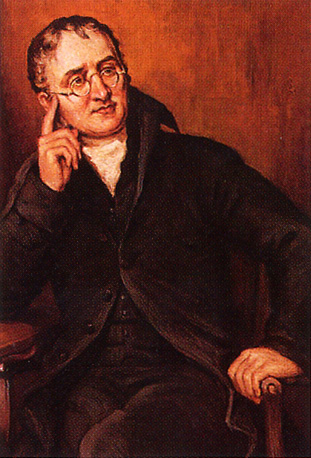
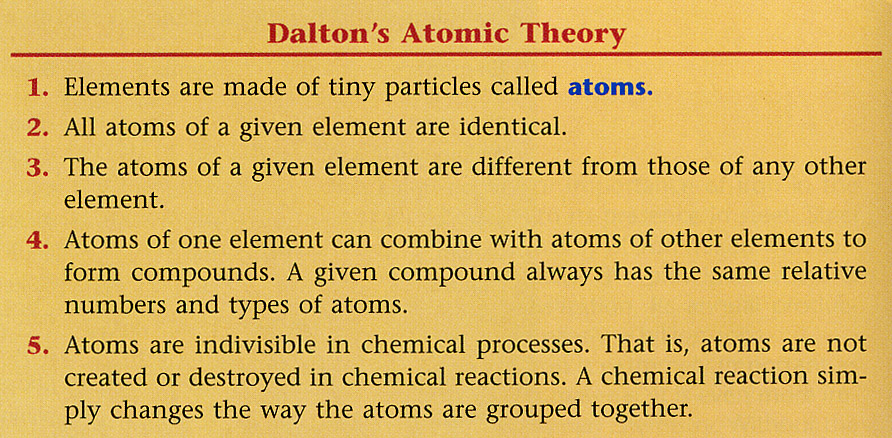
- John Dalton in early 1800s knew this and developed theory…
|
|
11
|
|
|
12
|
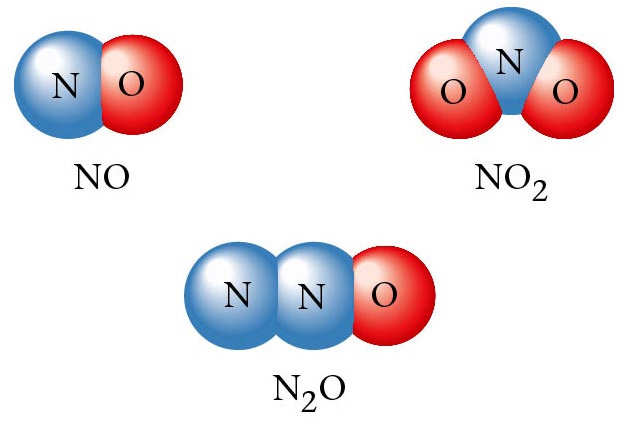
- his model explained a lot and even predicted the existence of other
chemicals like these
- Dalton’s Atomic Theory was not perfect but was a great start
|
|
13
|
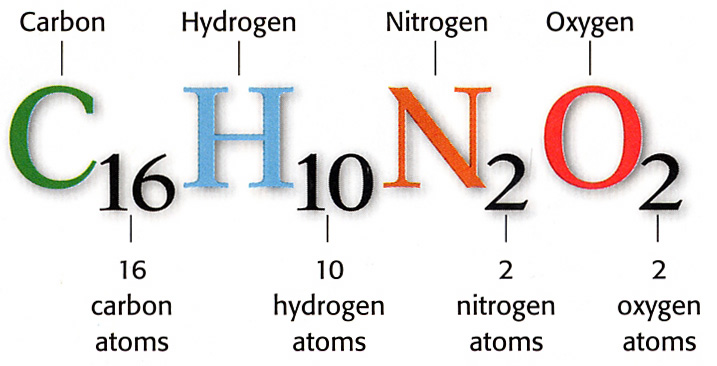
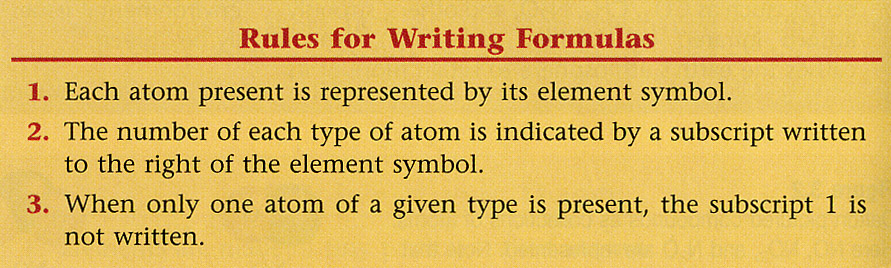
- Chemical formulas tell you what and relatively how many atoms are in a
compound
|
|
14
|
|
|
15
|
- In Dalton’s time scientists believed elements were made of atoms, and
compounds were atoms somehow held together
- but what is an atom?
- why do they stick?
- took nearly 100 years to figure it out!
|
|
16
|
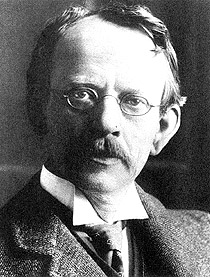
- in 1890s JJ Thomson of Cambridge U discovered that all atoms have
negative bits called electrons
- if so, must also contain positive part…
|
|
17
|
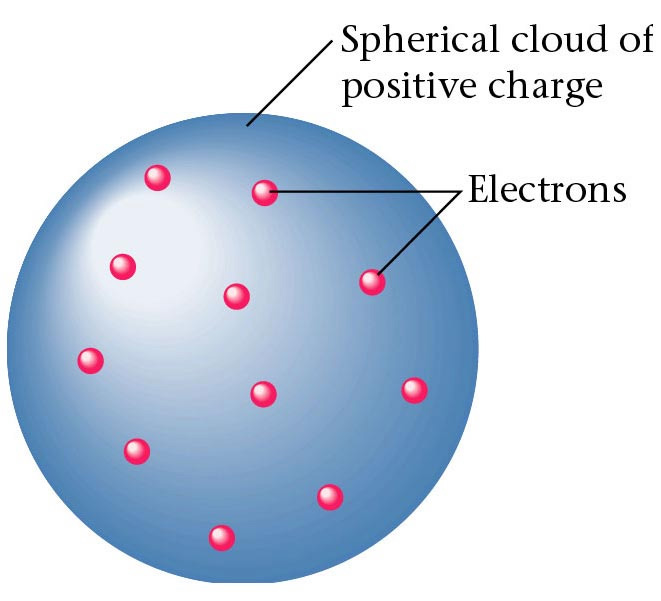
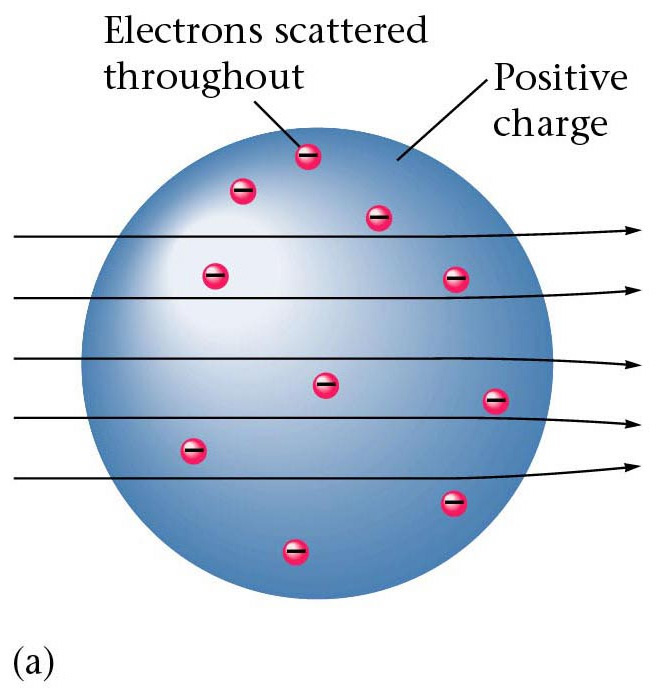
- William Thomson (aka Lord Kelvin) modeled the atom as a positive cloud
filled with electrons called the Plum Pudding Model
- positive cloud + electrons
= neutral atom
|
|
18
|
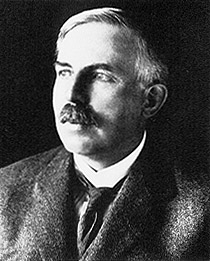
- Ernest Rutherford’s exp changed the plum pudding model
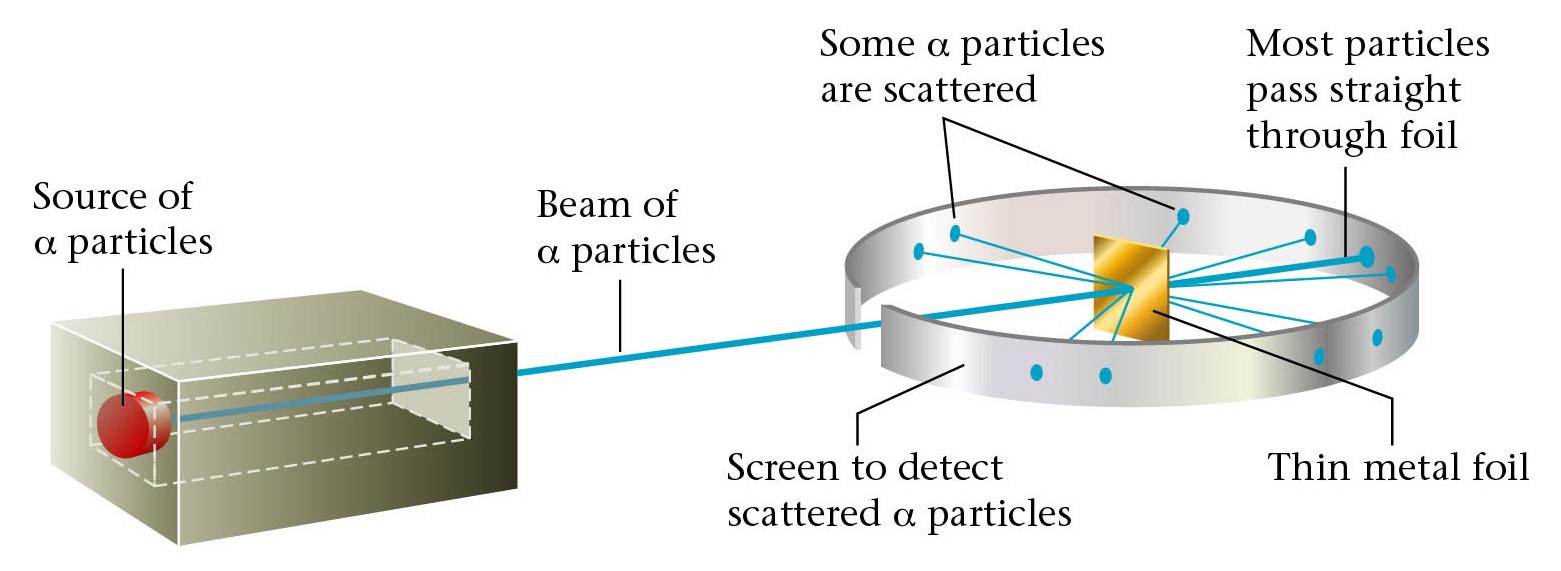
- he liked shooting “alpha” particles through things to see what would
happen
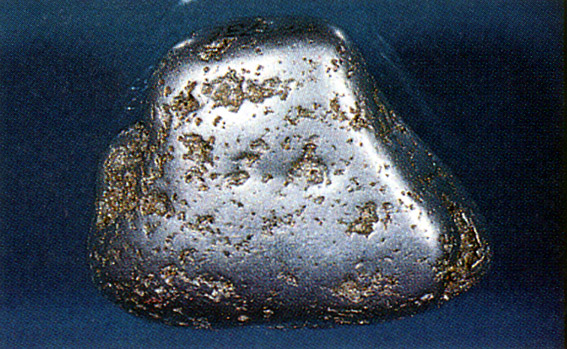
- so he shot some through really thin gold foil…
|
|
19
|
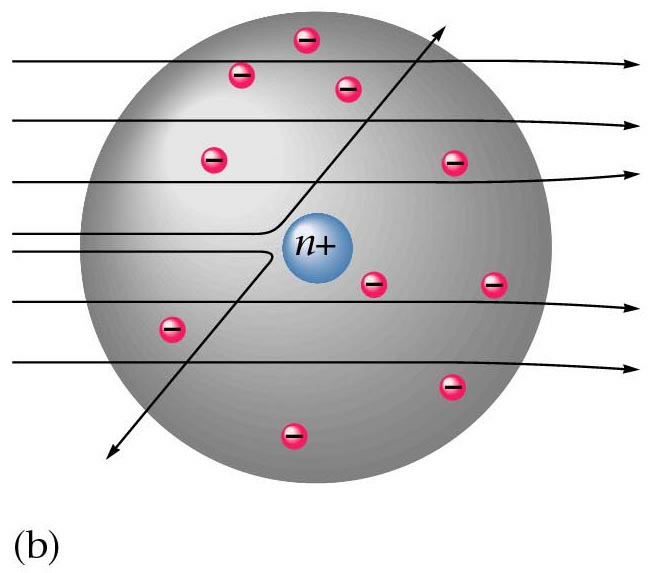
- to his great surprise, the positive alpha particles didn’t all plough
right through!
- some were deflected!
- implying there was some positive area in the atom that was deflecting
the positive alphas
|
|
20
|
- this is what should have happened if plum pudding model was correct
- Rutherford said since most made it, but some strongly deflected so that
the atom looks like…
|
|
21
|
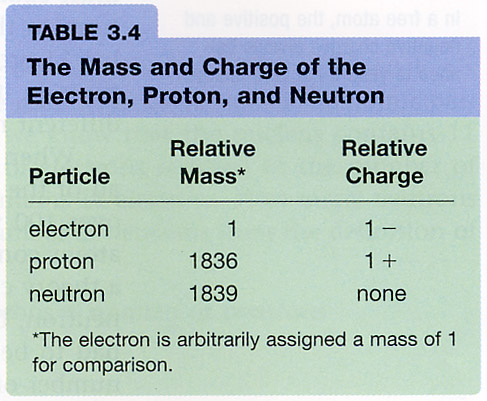
- ooooh look! a new player
- This is the nuclear atom (one with a nucleus)
- not until 1919 did they figure out the nucleus was made of particles
called protons
- proton had same size - but opposite - charge as electron
|
|
22
|
- Rutherford reasoned that hydrogen has just one proton, one electron
buzzing around it
- also reasoned that other atoms just had more protons and electrons
- by 1932, a neutral particle - the neutron - was discovered in the
nucleus to complete the puzzle
|
|
23
|
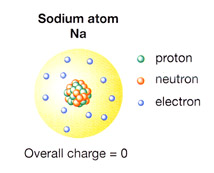
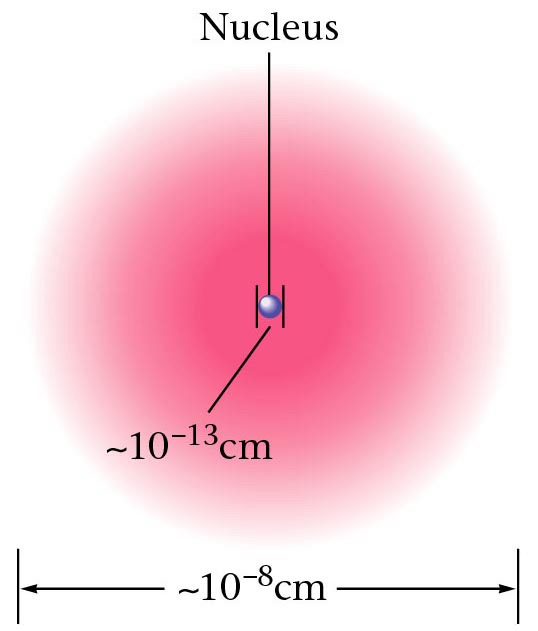
- today’s model looks something like this
- ultra-small nucleus
- atom is about 100,000 times bigger than the nucleus!
- like a grain of sand in the middle of the stadium
- the players are…
|
|
24
|
|
|
25
|
- Important!!! if all atoms are made of just these three things, why do
they all act differently?
- It has to do with how many there are and how they are arranged
|
|
26
|
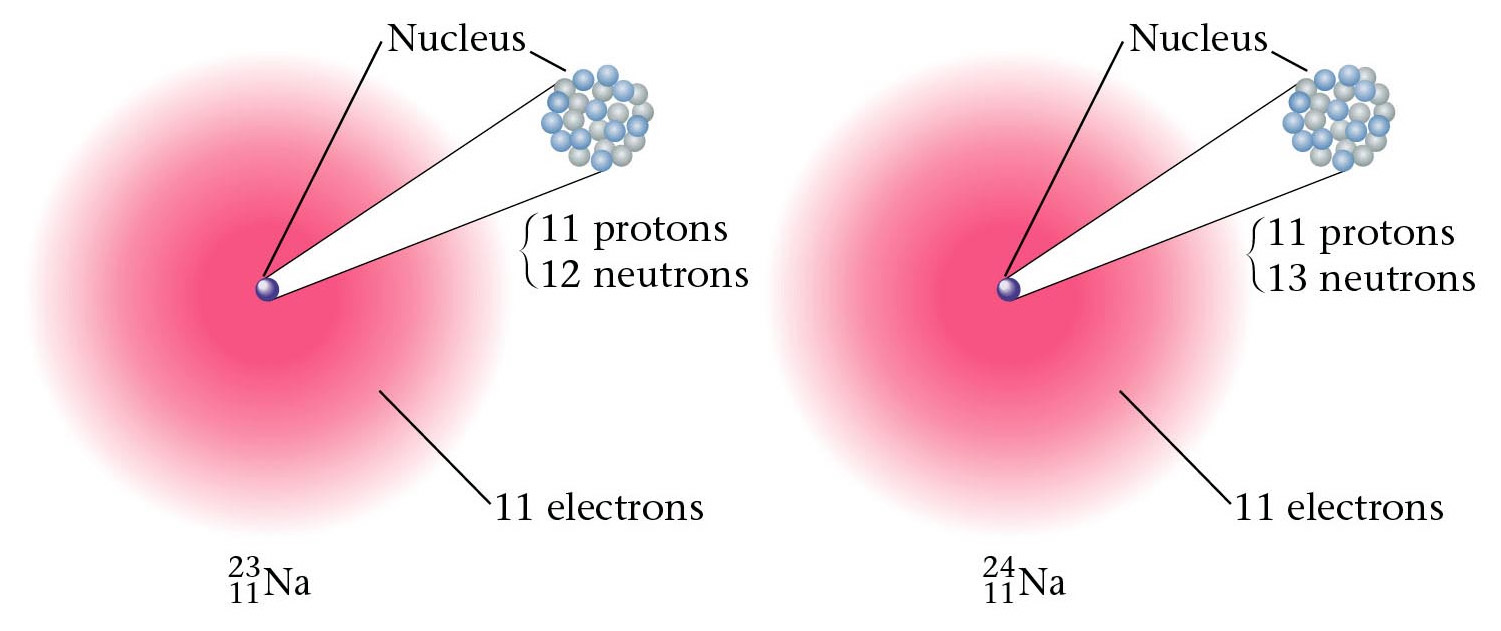
- Turns out that Dalton was sorta wrong - not all atoms of the same
element are alike
- Turns out that although protons and electrons are the same, neutrons can
differ!
|
|
27
|
- these are isotopes
- same p, same e, different n
- number of protons = atomic number
- p + n = mass number
- therefore isotopes differ by mass number
|
|
28
|
- X = chemical symbol
- A = mass number
- Z = atomic number
- named by element followed by mass number
- e.g…
- carbon with 6 protons and 8 neutrons is called C-14 (carbon-14) and
represented like…
|
|
29
|
- want a quick reference guide to all the known elements?
- that’s the periodic table
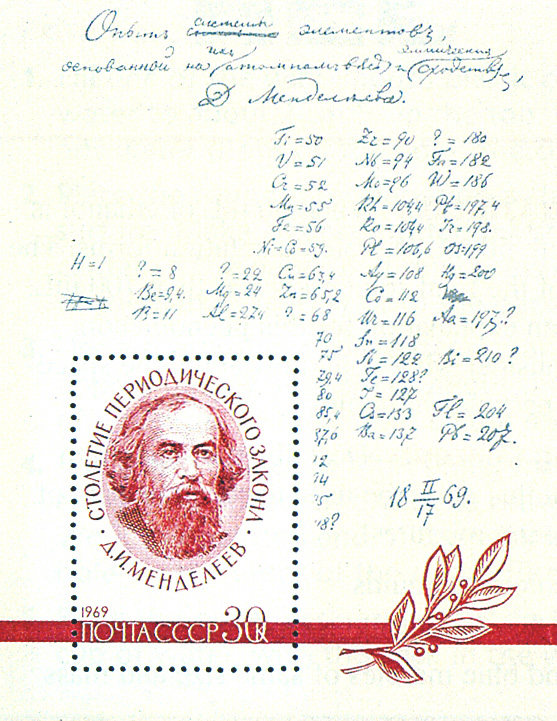
- first introduced by Dmitri Mendeleev
|
|
30
|
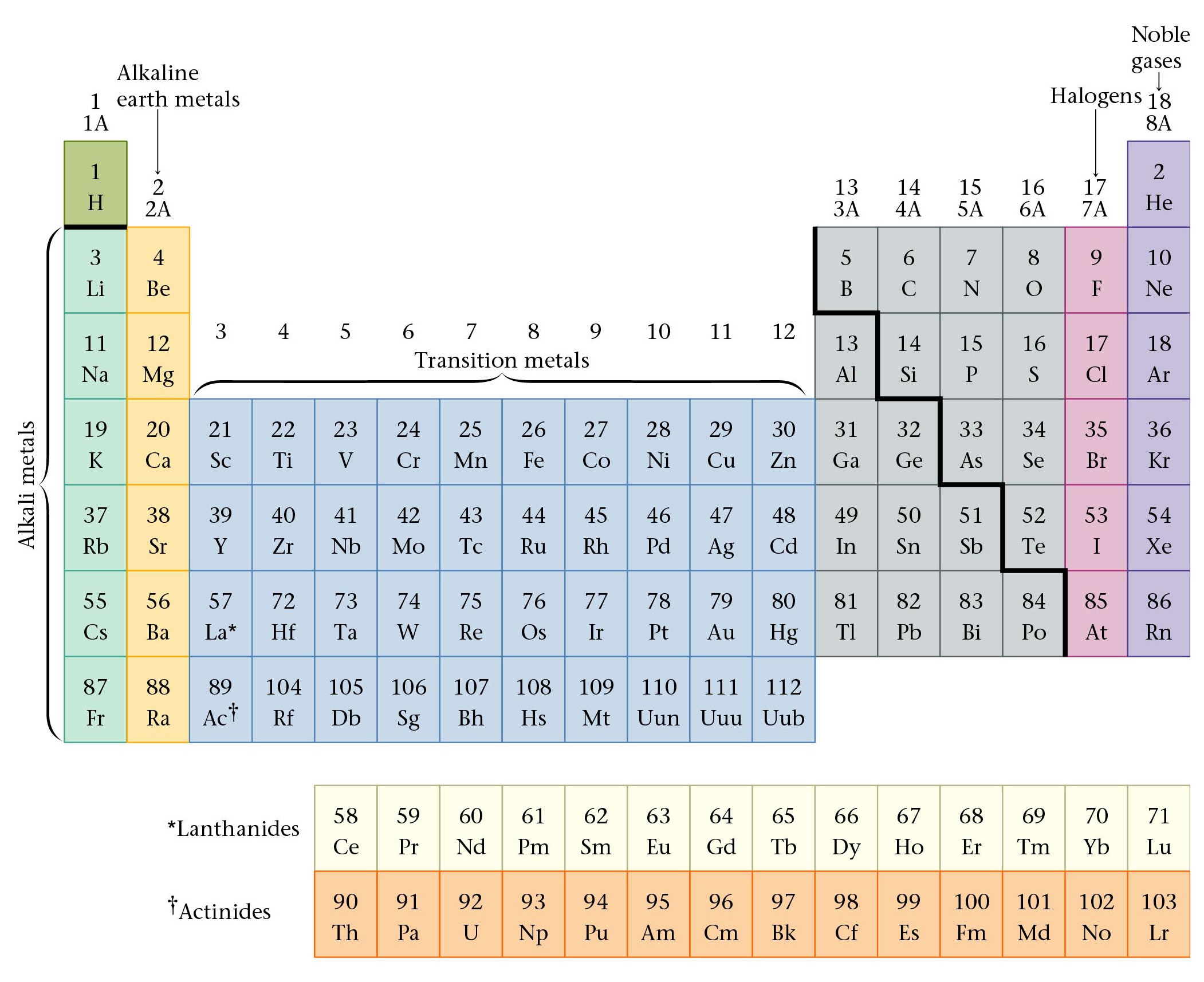
- notice in this simple Periodic Table: ordered by increasing at#
- Mendeleev ordered vertical columns by similar properties
- the properties repeat periodically (\ periodic table)
|
|
31
|
- the vertical groups are called families or simply “groups”
- numbered 1-18, or by A and B groups
- group 1 = alkali metals
- group 2 = alkaline earth metals
- group 17 = halogens
- group 18 = noble gases
- group 3-12 = transition metals
- know them!
|
|
32
|
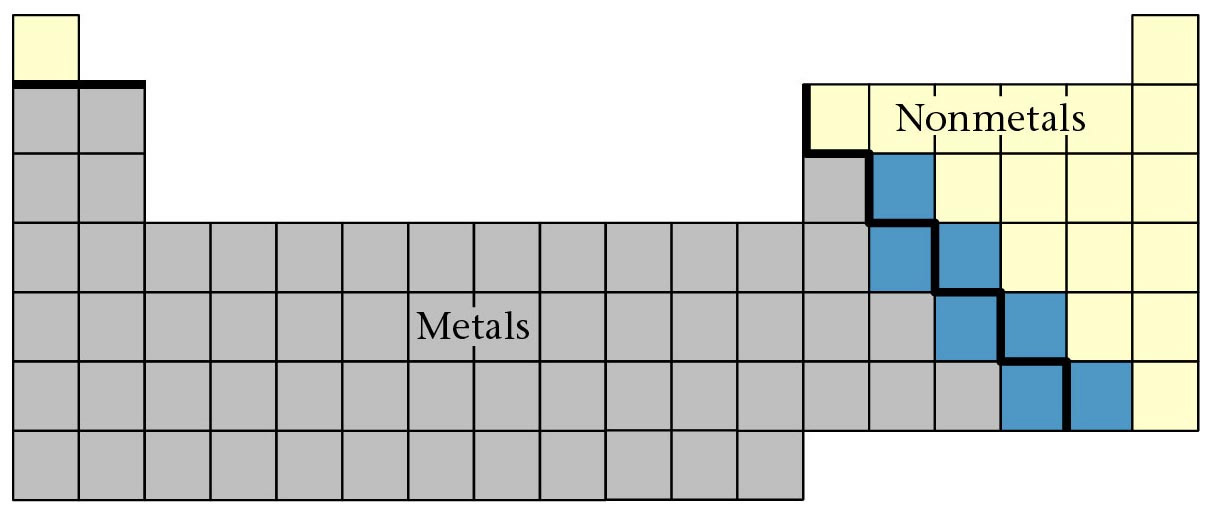
- metals make up most of the Periodic Table
- they can be found here…
|
|
33
|
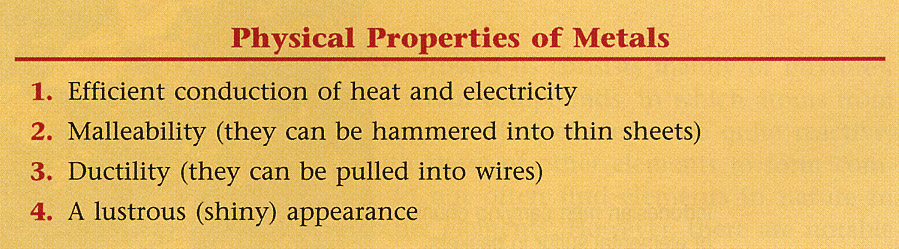
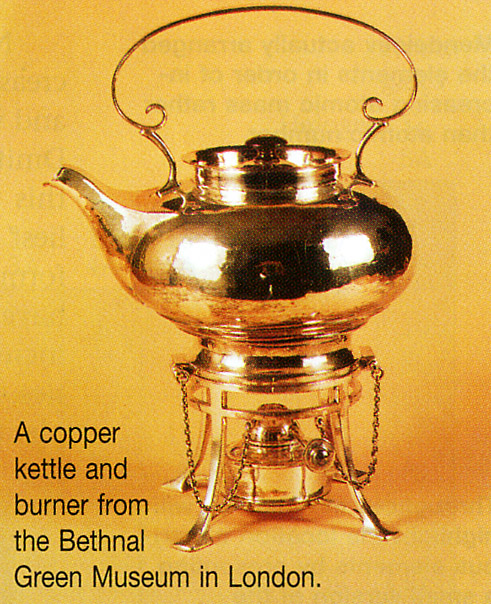
- copper is perfect example
- is very lustrous (shiny)
- easily shaped (malleable)
- can be drawn out into copper wire (ductile)
- but what about things which aren’t metal-like?…
|
|
34
|
- non-metals are called… nonmetals
- they have properties practically opposite of metals
- brittle, dull, nonconductive
|
|
35
|
- some elements have both metal and nonmetal properties
- called metalloids or semimetals
- located on staircase
|
|
36
|
- Symbol, Atomic number, M/NM, Family
- Argon Ar 18 NM noble gas
- Chlorine Cl 17 NM halogen
- Barium Ba 56 M alkali earth
- Cesium Cs 55 M alkali
|
|
37
|
- not a whole lot of elements occur nakkie (i.e. uncombined)
- some metals (noble metals) can be found in their pure, uncombined state
- so do the noble gases (group 8)
- but so do…
|
|
38
|
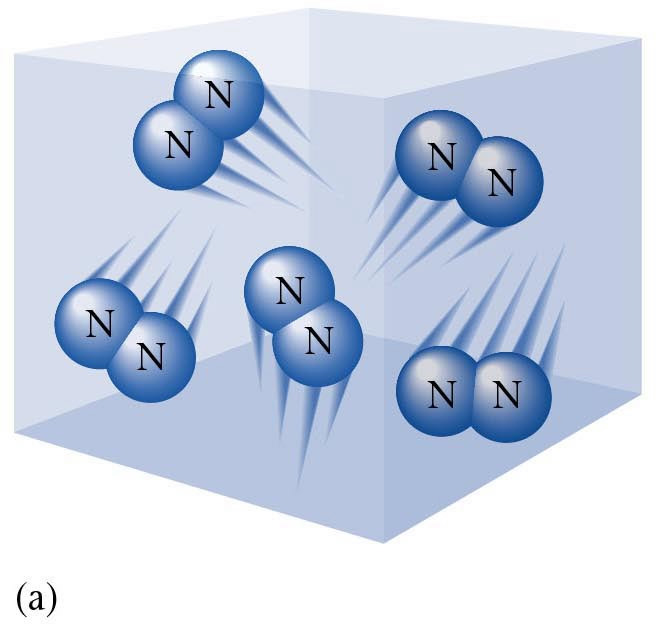
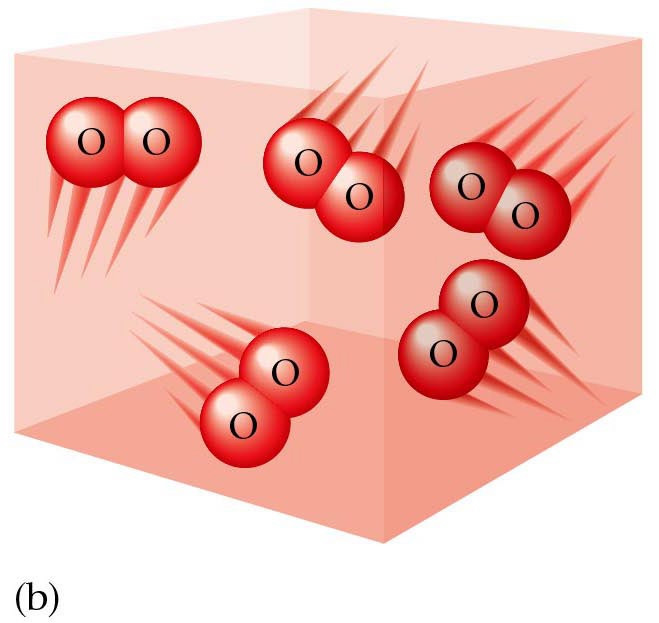
- Diatomic elements!
- these critters travel in twosies
- notice they are elements - not compounds!
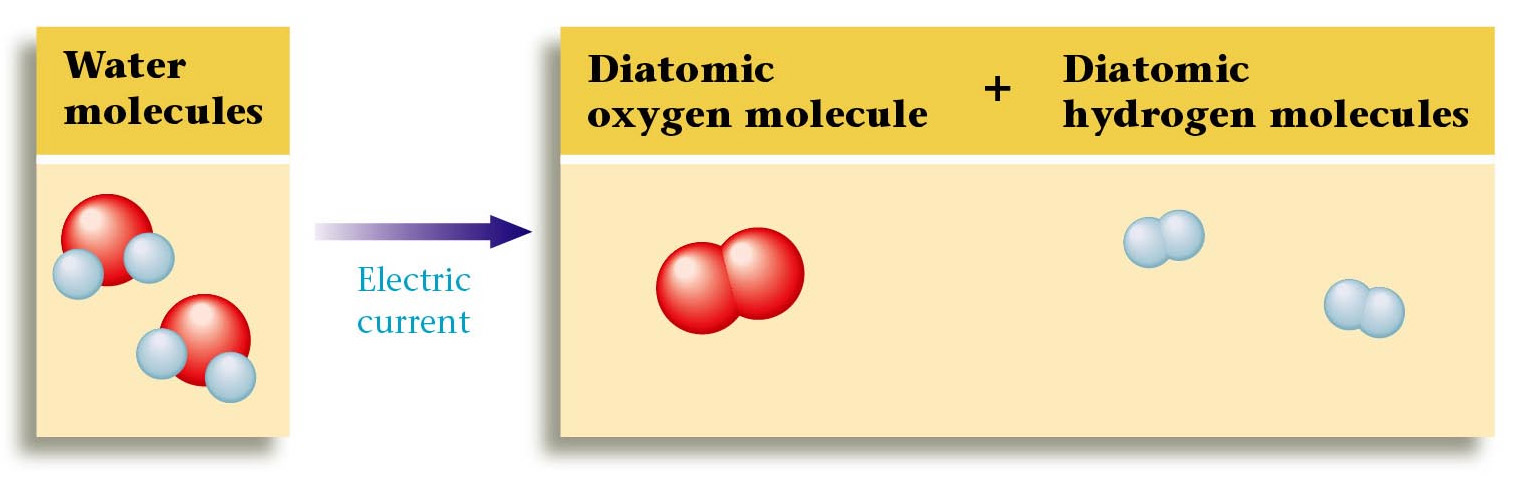
- hydrogen is almost always with another element, but when separated is
diatomic
|
|
39
|
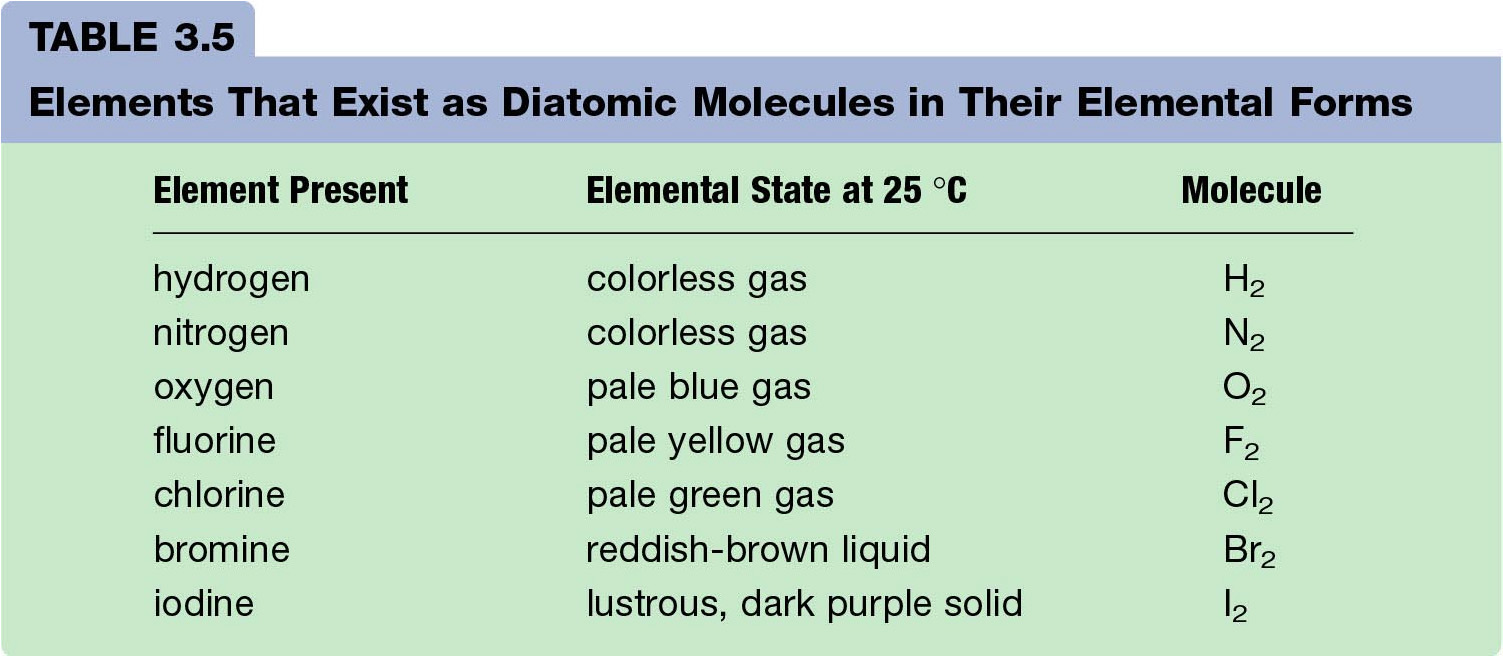
- here are diatomic molecules
- remember: Professor BrINClHOF
- notice: many are halogens
|
|
40
|
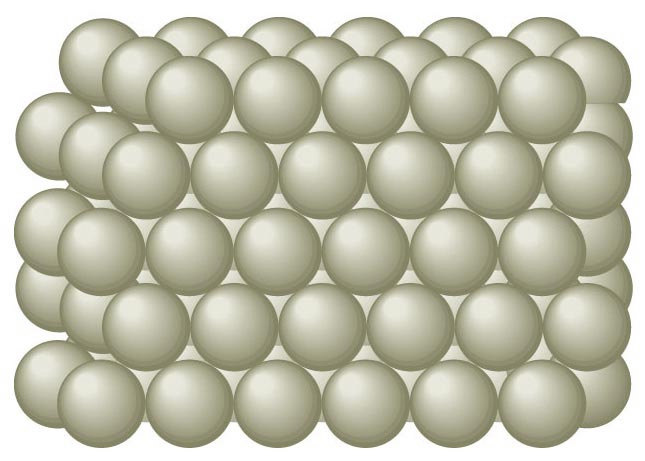
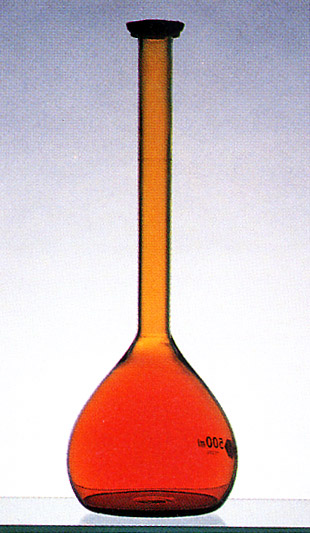
- the noble gases and the BrINClHOF guys are gases
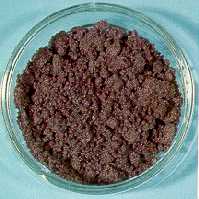
- only two elements occur as liquids at 25˚C (bromine and mercury)
- all the rest are solids, which are usually just atoms packed in real
tight
|
|
41
|
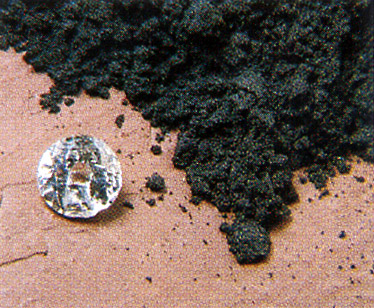
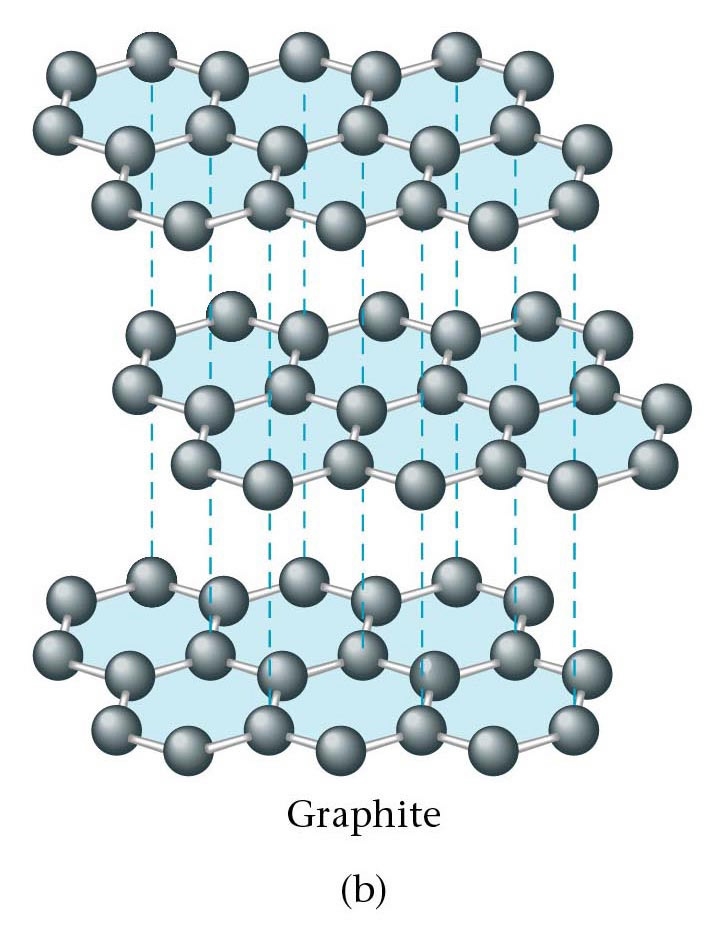
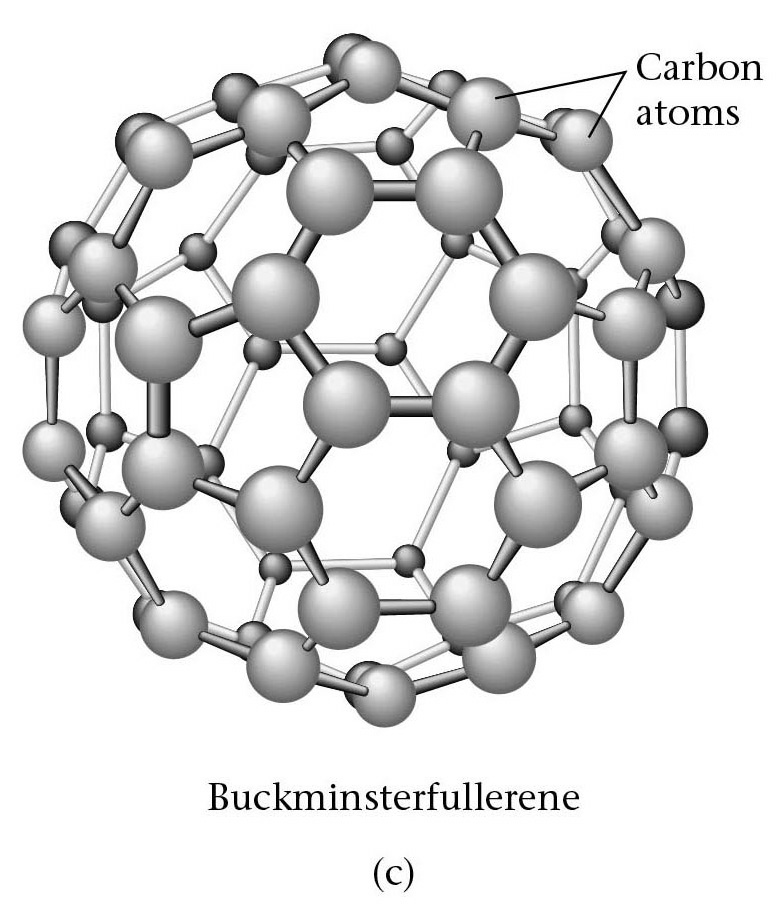
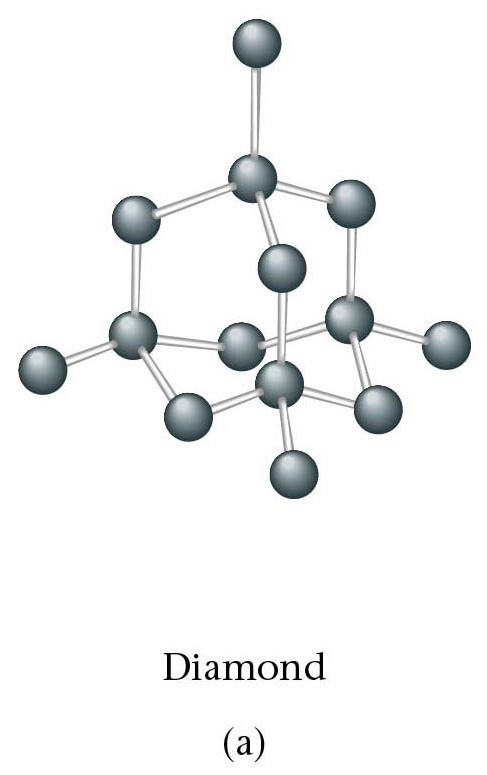
- the nonmetals can take on all kinds of arrangements
- different arrangements of same element called allotropes
- allotropes have diff properties because of different arrangements
|
|
42
|
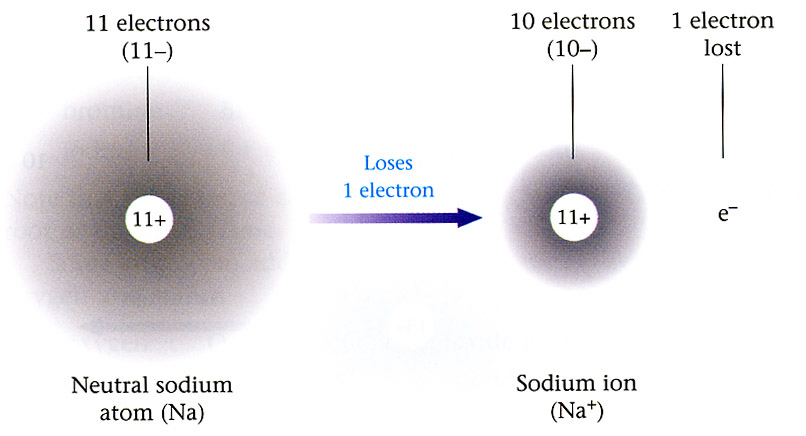
- Atoms have a zero net charge,
i.e. protons = electrons
- But what if you strip an electron off or put an extra one on?
- a charged thing called an ion
|
|
43
|
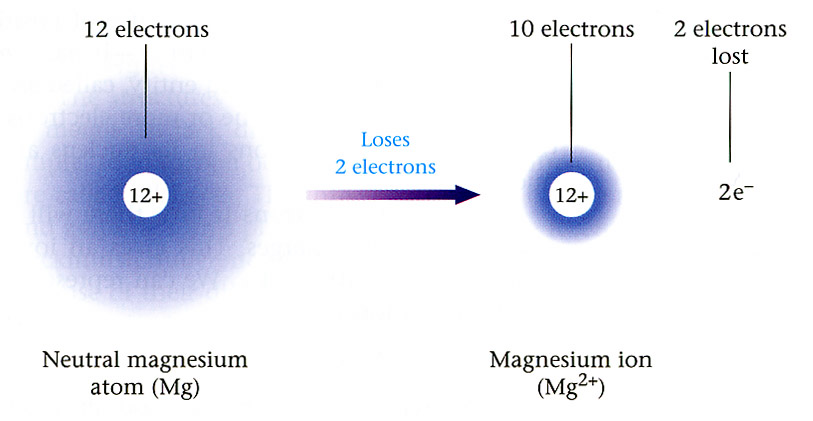
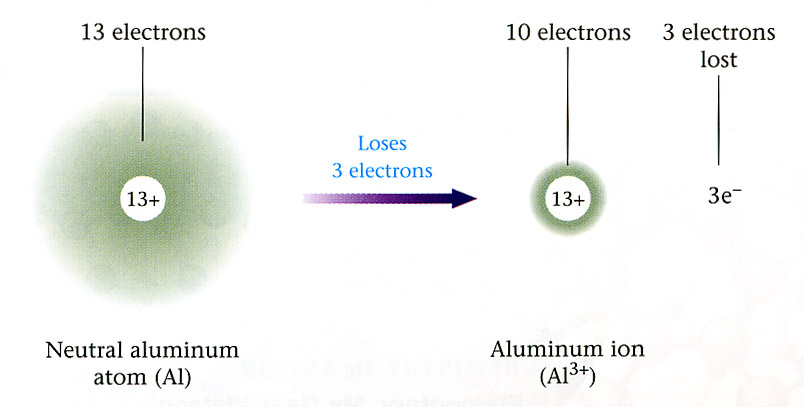
- When an atom loses an e-, we get a positive ion called a cation
- lose one e-, get a 1+ charge; lose two e-, get a
2+ charge
- The ion is named after parent atom
- e.g. aluminum ion, magnesium ion
|
|
44
|
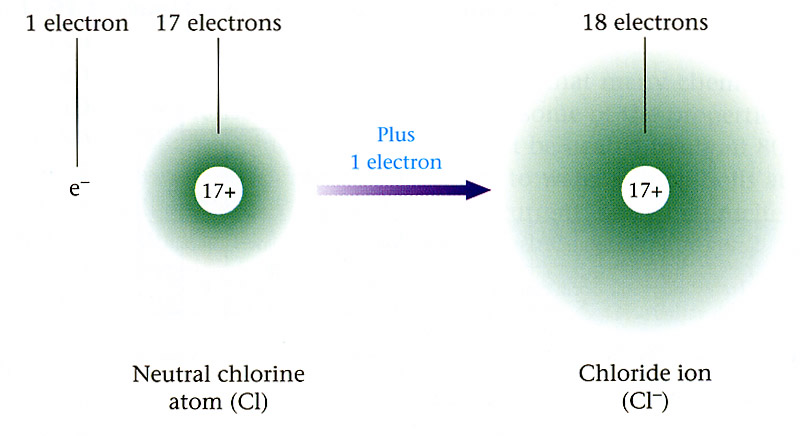
- What if it gains an electron? anion
- The name, however, changes! adds an -ide to the end
- !!! ions only formed by changing e-, never p
- !!! never happens alone; something always makes them fall off or add on
|
|
45
|
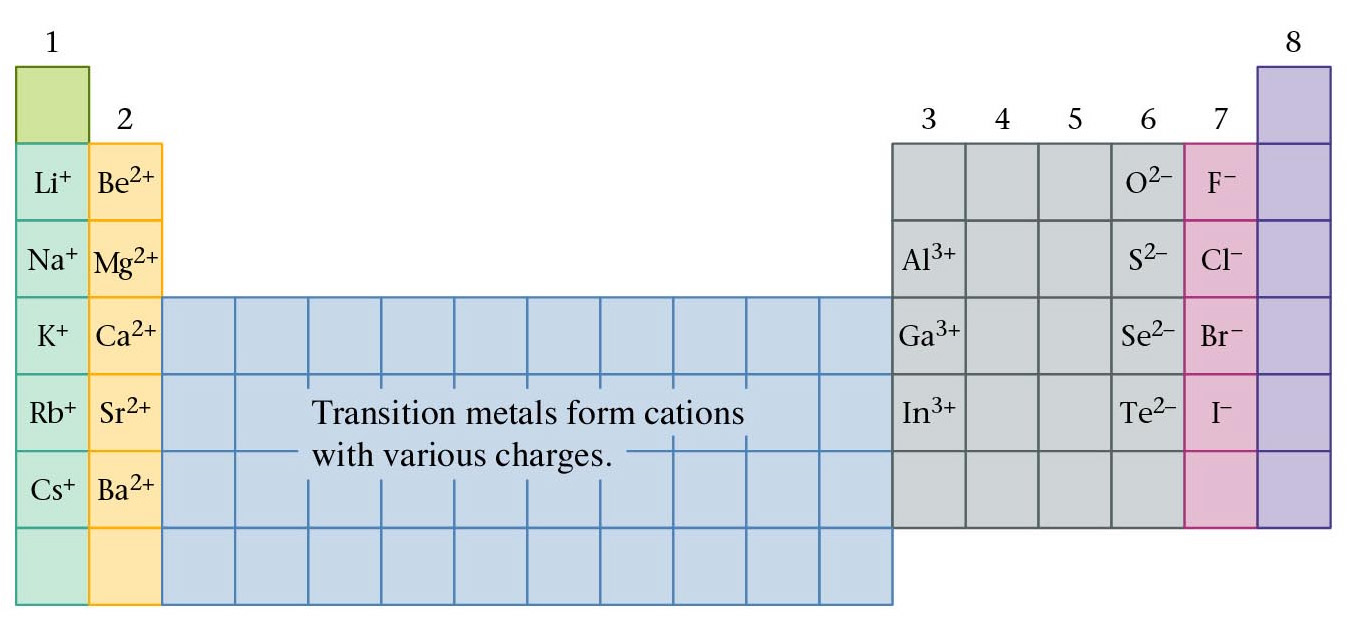
- want an easy way to remember these charges?
- metals lose e- (form cations)
nonmetals gain e- (form anions)
- see the pattern? know the pattern!
;)
|
|
46
|
- Evidence that compounds contain ions?
- When melted down salt will conduct electricity, but not in the solid
state
- hmmmm…
|
|
47
|
- Also lights the light when it is dissolved in water
- Electricity only flows if there are charged things allowing electrons to
flow
|
|
48
|
- Conclusion? Salt must be made of positive and negative particles held
together tightly
|
|
49
|
- These compounds made of ions are called ionic compounds
- When putting these together we must remember that overall their charges
cancel out
- i.e. total positive charge = total negative charge
- So! When you write formulas for these remember to have cations AND
anions, and make sure there are enough so + = -
|
|
50
|
- Calcium & Chlorine
- Ca Cl
- Ca2+ Cl-
- You need two Cl for every Ca
- Therefore, CaCl2
|
|
51
|
- Magnesium & Oxygen
- Mg O
- Mg2+ O2-
- One to one,
- therefore MgO
|
|
52
|
- Aluminum & Bromine
- Al3+ Br-
- AlBr3
- Sodium & Sulfur
- Na+ S2-
- Na2S
|

 Notes
Notes